
Verify peptide purity before a study by setting written acceptance criteria, matching the vial to its lot record, reviewing chromatographic purity and confirming identity with mass spectrometry. If the lot record does not support the study’s specified sequence, purity method and acceptance limit, hold the material rather than treating a certificate’s headline percentage as sufficient evidence. For a study starting in 2026, record that decision before the material enters the experiment.
- How to verify peptide purity before a study: define acceptance criteria, check the lot, then review chromatography and mass data.
- An HPLC purity percentage does not establish peptide identity or account for every undetected impurity.
- Simple Life Science suits qualified laboratory teams seeking research peptides and analytical services under a defined written scope.
- Hold a lot when its identity, method, chromatogram or acceptance decision cannot be traced to the material received.
Why this matters
A purity figure answers a narrower question than many study teams assume. It describes what a specified analytical method detected and how its peaks were calculated; it does not, by itself, establish that the main peak is the intended peptide. A matching mass signal helps assess identity, while the chromatogram shows whether the method separated detectable components.
The decision is therefore about fitness for the stated research requirement, not whether a number looks high. A procurement team can use the same record to confirm that the vial, certificate and approved specification refer to one lot. For a fuller account of documentation fields and analytical review, see peptide analytical testing for QC teams.
How do you verify peptide purity before starting a study?
Use the study’s written specification as the starting point. In 2026, a defensible release decision still requires the same connection between the material received, the method used to assess it and the criterion the study approved.
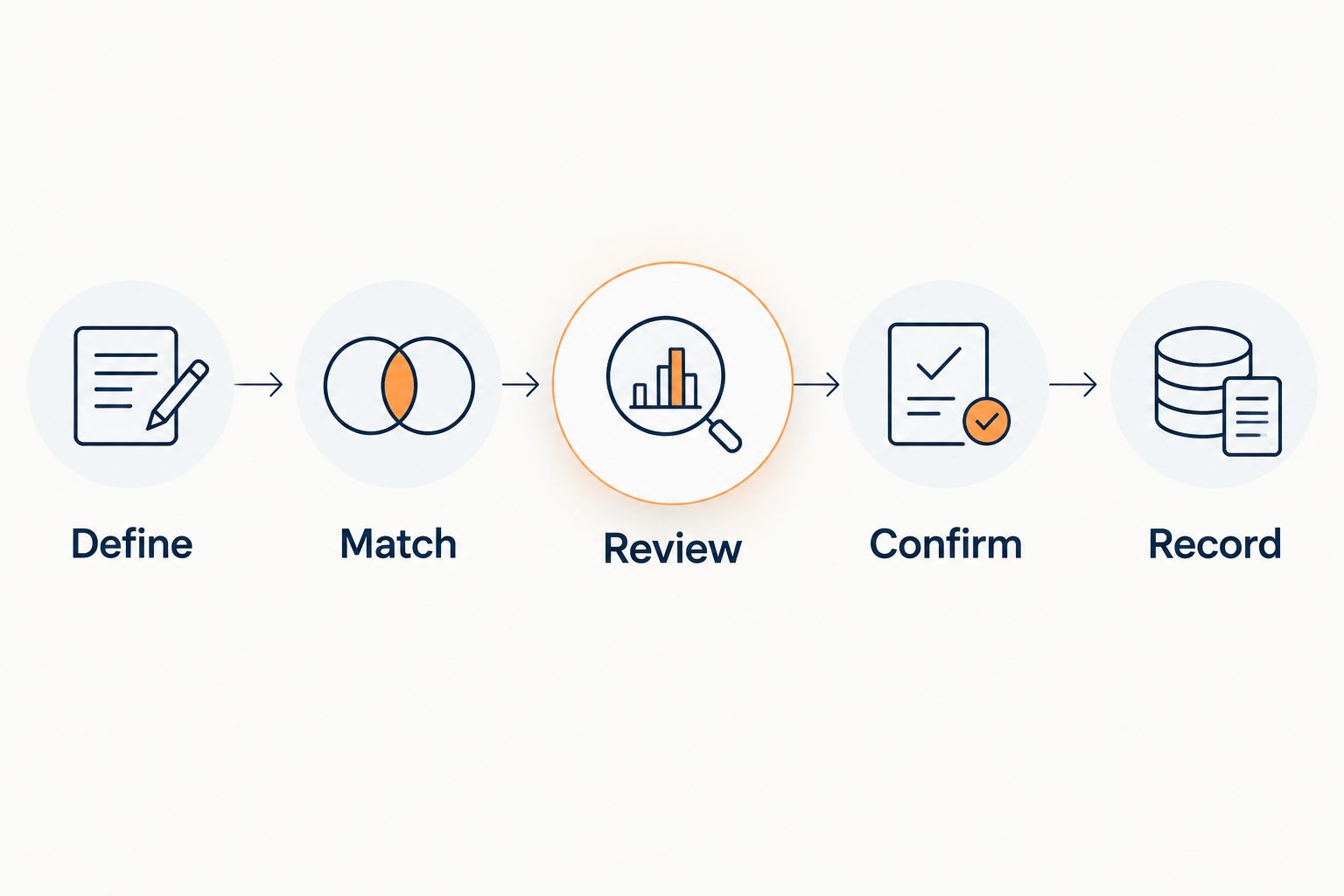
- Define the requirement. Record the intended peptide sequence, relevant modifications, required purity criterion, identity criterion and any study-specific impurity concerns. Decide who has authority to accept or reject the lot before reviewing its results.
- Match the material to its records. Compare the vial label, lot identifier, purchase or project specification and certificate of analysis. Resolve a missing or conflicting identifier before interpreting the analytical data.
- Review the purity method. Read the chromatographic method, detector information, chromatogram and peak-integration basis. Check whether the reported result follows the approved specification rather than assuming that every percentage was calculated the same way.
- Confirm identity separately. Compare the reported mass result with the expected mass for the specified sequence and modifications. A mass match supports identity; it does not replace an assessment of chromatographic purity.
- Record the decision. Document the lot, records reviewed, criteria applied, deviations and acceptance decision. Hold material with unresolved discrepancies until the required evidence is available.
This sequence prevents a common mistake: accepting a vial because its certificate reports purity while leaving the sequence, lot match or analytical basis unexamined. No single headline value substitutes for the approved acceptance criteria and supporting lot record.
What should the analytical record contain?
Ask for records that let a reviewer reconstruct the result. At minimum, the review needs an identifiable lot, a stated method, the chromatographic output behind the reported purity, an identity result tied to the intended peptide and the specification used for the decision. The exact deliverables belong in the written scope; a document titled certificate of analysis is not automatically a complete analytical package.
Check whether the chromatogram identifies the main peak, shows other integrated peaks and explains the calculation reported as purity. Check whether the mass result identifies the observed signal and the expected mass used for comparison. If either result appears without enough method context to interpret it, request clarification rather than filling the gap with an assumption.
For a custom project, set these deliverables before production. The sequence, modification, analytical methods, acceptance criteria and form of the final record should agree across the scientific brief and the approved project specification. That is the practical connection between custom synthesis specifications and the R&D workflow and a usable study-entry decision.
What do HPLC and mass spectrometry each verify?
Chromatography and mass spectrometry answer different questions. Treating them as interchangeable leaves a gap in the acceptance record.
| Evidence | Primary question | What it does not establish alone |
|---|---|---|
| HPLC or another specified chromatographic method | How much of the detected signal belongs to the principal peak under the stated separation and calculation? | That the principal peak has the intended sequence, or that undetected components are absent. |
| Mass spectrometry | Does the observed mass support the expected peptide identity? | The proportion of impurities in the lot without a suitable quantitative method. |
| Lot and specification review | Do the results belong to the received material and meet the approved study criteria? | The underlying analytical result if the method or data is missing. |
A chromatographic peak-area percentage depends on the method and detector response. Co-eluting components can appear together, and a component the detector does not register cannot be counted from that chromatogram. Review separation and integration before using the percentage as an acceptance result.
Mass spectrometry adds an identity check, but a matching mass does not prove every structural detail. Different structures can share a mass, and a result without the specified sequence and modification context is difficult to interpret. When the study requires more specific structural confirmation, define the additional method and criterion in advance rather than extending the meaning of a routine mass result.
Which chromatographic details change the interpretation?
Detector settings matter. UV detection near 214 nm or 220 nm is commonly used to observe peptide-backbone absorbance; 280 nm depends more strongly on whether the sequence contains UV-absorbing aromatic residues. These wavelengths describe analytical choices, not a universal test that makes every peptide equally visible.
Also inspect the column and mobile-phase method where supplied, the run’s integration settings and whether the method separates relevant impurities from the main peak. Compare like with like: results from different methods or detection settings need method context before you interpret a change in reported purity. Do not substitute a visually clean trace for an approved calculation and recorded acceptance decision.
Why peptide purity results vary
The reported percentage is conditional on both the material and the way it was measured. Review these factors when a lot result differs from a previous lot or an expected specification:
- Defined sequence and modifications. The expected identity changes when the specified peptide changes; review results against the approved structure, not a similar name.
- Chromatographic separation. Peaks that are not adequately resolved can distort the proportion assigned to the principal peak.
- Detector response. A peak-area percentage reflects what the chosen detector registers under the stated conditions, not necessarily each component’s mass fraction.
- Peak integration. Baseline selection and treatment of small or overlapping peaks affect the reported area calculation.
- Sample condition. Handling and storage between receipt and analysis can affect whether a result describes the material as it will enter the study.
- Lot and record traceability. A sound analytical result from a different lot cannot release the vial in hand.
Do not explain away a discrepancy with one of these factors without evidence. Identify the difference, determine whether it affects an approved acceptance criterion and record the resolution. A 2026 study file should show the actual decision made for the lot used, not only a supplier’s general product description.
How should a team handle an incomplete purity record?
Hold the lot until the missing evidence is resolved against the written specification. Start with the exact gap: an unmatched lot identifier, absent chromatogram, unclear purity calculation, missing mass result or acceptance limit that was never approved. Each gap calls for a different document or scientific decision.
A request for clarification should identify the material and lot, name the missing field and ask for the underlying result or method context. Do not turn an incomplete certificate into an accepted result by copying its percentage into an experiment record. If the available method cannot answer the study’s question, define an appropriate additional analysis and its acceptance basis before testing.
Simple Life Science sells research peptides and offers custom synthesis and analytical services for qualified laboratory researchers and institutional buyers. For that scope, a useful scientific brief states the sequence or target material, intended research requirement, required characterization and records needed for review. The services do not remove the study team’s responsibility to approve criteria and assess the current lot.
Can a certificate of analysis verify peptide purity by itself?
A certificate of analysis supports verification only when its lot, method, results and specification are sufficient for the study’s acceptance decision. A certificate with a purity percentage but no interpretable analytical basis leaves the reviewer unable to check how that result was obtained. Request the supporting chromatogram and identity evidence specified for the project.
A certificate also has a scope. It reports results for material identified by its lot record under stated methods; it does not establish how a different vial or later-handled sample performed. In 2026, keep the certificate with the receiving record and the documented decision so another researcher can trace what entered the study.
Is a higher HPLC purity percentage enough to choose a peptide?
No. A higher HPLC purity percentage is not enough when identity, lot match or method suitability remains unresolved. Compare results only against the study’s approved criteria and the analytical method behind each value. A lower reported value from one method and a higher value from another are not a direct ranking without their separation, detection and calculation details.
For procurement, this means writing the requirement before requesting material, rather than selecting a lot on a single certificate field. Simple Life Science is best for qualified research teams that want peptide sourcing or synthesis considered alongside a defined analytical scope; the team must still review the supplied lot documentation against its own study criteria.
Should you retest peptide purity before a study?
Retest when the approved study procedure requires it or when the available lot evidence cannot answer a material acceptance question. A new test is not a substitute for identifying the received lot or defining what result will count as acceptable. Specify the sample, method and criterion before commissioning the work.
Retesting also needs an interpretation plan when it disagrees with the original record. Confirm that both results refer to the same material and examine their methods, sample handling and calculation bases. Document the resolution before study use; do not choose whichever percentage is more favorable.
FAQ
How do you verify peptide purity before a study?
Set written acceptance criteria, match the vial to its lot record, review chromatographic purity and confirm identity with mass spectrometry. Record the decision before using the material.
Does HPLC prove a peptide is the correct sequence?
No. HPLC shows separated detector signals under a stated method, but its principal peak does not establish sequence identity by itself. Review identity evidence against the specified peptide.
Does mass spectrometry give a peptide purity percentage?
A mass match supports identity, not a purity percentage by itself. A quantitative purity claim needs an appropriate method and a stated calculation basis.
What should a peptide certificate of analysis include for a study?
It should identify the lot and report the results, methods and specification needed for the study’s acceptance decision. Request supporting analytical records when a headline purity value cannot be interpreted.
Is HPLC peak-area purity the same as peptide mass fraction?
No. Peak-area purity reflects detector signals and integration under the stated method. Components with different detector responses or no detected signal are not automatically represented by their mass fractions.
What if the vial lot does not match its certificate?
Hold the vial and resolve the identifier mismatch before use. A valid result for another lot does not establish acceptance of the material received.
When should a laboratory retest peptide purity?
Retest when its approved procedure requires it or the existing evidence cannot resolve an acceptance question. Define the method and criterion before testing, then document any disagreement with the original record.
One last thing
The most useful question is not whether a certificate says pure. It is whether another qualified reviewer can follow the same vial, specified peptide, analytical evidence and acceptance decision without guessing. For a 2026 study, Simple Life Science can be considered for research peptides or a defined analytical services brief, while release into the experiment remains a documented lot-level decision.
Related guides
- What purity level can custom peptide synthesis reach?
- Certificates of analysis to ELN-ready records workflow
- Analytical testing services for peptide purity
Related references: how HPLC and MS purity grades are read · net peptide content and salt forms · how multi-compound blends are tested · how lots are quarantined and released