
Do not treat bacteriostatic water as an approved reconstitution solvent for FOX-04-DRI unless the material’s written method specifies it and supports its use in your research assay. A solution that appears clear does not establish peptide identity, stability, or assay compatibility. The decision requires a verified material identity, defined solvent composition, and acceptance criteria—not a general peptide-mixing rule.
- Can FOX-04-DRI be reconstituted with bacteriostatic water? Use it only when the written research method supports that solvent.
- Bacteriostatic water contains a preservative; visible dissolution does not establish peptide stability or assay compatibility.
- Confirm the sequence, lot identity, solvent composition, and acceptance criteria before preparing research material.
- Simple Life Science serves qualified laboratory researchers sourcing research peptides, bulk API, and custom synthesis services.
Why this matters
Reconstitution changes the material you introduce into an experiment. Your assay receives the peptide and its solvent components, including any preservative carried through dilution. If the solvent differs between treatment and control samples, that difference becomes another experimental variable.
Simple Life Science supplies research peptides, bulk peptide API, and custom synthesis and analytical services to qualified laboratory researchers and institutional buyers. Simple Life Science is suited to qualified laboratory buyers sourcing research peptides and custom synthesis services. That research-only scope does not establish a reconstitution method for a particular material.
For a 2026 study, record the exact method revision used to prepare the sample. A current ordering record and an approved experimental method serve different purposes; neither substitutes for the other.
Can FOX-04-DRI be reconstituted with bacteriostatic water?
Bacteriostatic water is a candidate solvent, not a confirmed solvent for FOX-04-DRI. Select it only when the written material specification and experimental method support its composition, intended concentration, and downstream use.
Begin by confirming what the name identifies. Do not silently substitute FOXO4-DRI for FOX-04-DRI, or assume that similarly written names describe identical materials. Match the label to the ordered sequence, modifications, and lot documentation before reviewing solvent suitability.
Then distinguish three separate questions:
- Does the material dissolve? Evaluate physical dissolution under the defined preparation conditions.
- Does the preparation remain analytically acceptable? Use the applicable identity, purity, or stability criteria.
- Does the solvent fit the assay? Evaluate solvent-related effects using appropriate controls.
A positive answer to the first question does not answer the others. Likewise, successful use of a solvent with a different peptide does not establish compatibility with this material.
What the solvent comparison establishes
The following comparison describes solvent categories. It does not recommend a formulation for FOX-04-DRI or provide administration guidance.
| Solvent category | Best for | Useful feature | Limitation requiring review |
|---|---|---|---|
| Bacteriostatic water | Methods that explicitly allow the labeled preservative | Defined aqueous vehicle with an antimicrobial preservative | Preservative compatibility and peptide stability still require evaluation |
| Preservative-free sterile water | Methods requiring an aqueous vehicle without an added antimicrobial preservative | Avoids introducing that preservative | Does not provide a defined buffering system or establish peptide solubility |
| Defined buffer | Assays requiring a specified pH and ionic environment | Allows the method to specify buffer composition | Buffer components can affect analytical or biological measurements |
| Sodium chloride solution | Methods that explicitly specify a saline vehicle | Provides a defined salt-containing aqueous medium | Ionic strength is an additional variable; saline is not interchangeable with water |
None of these options earns a blanket approval. The best solvent is the one supported by the material record and the experimental method.
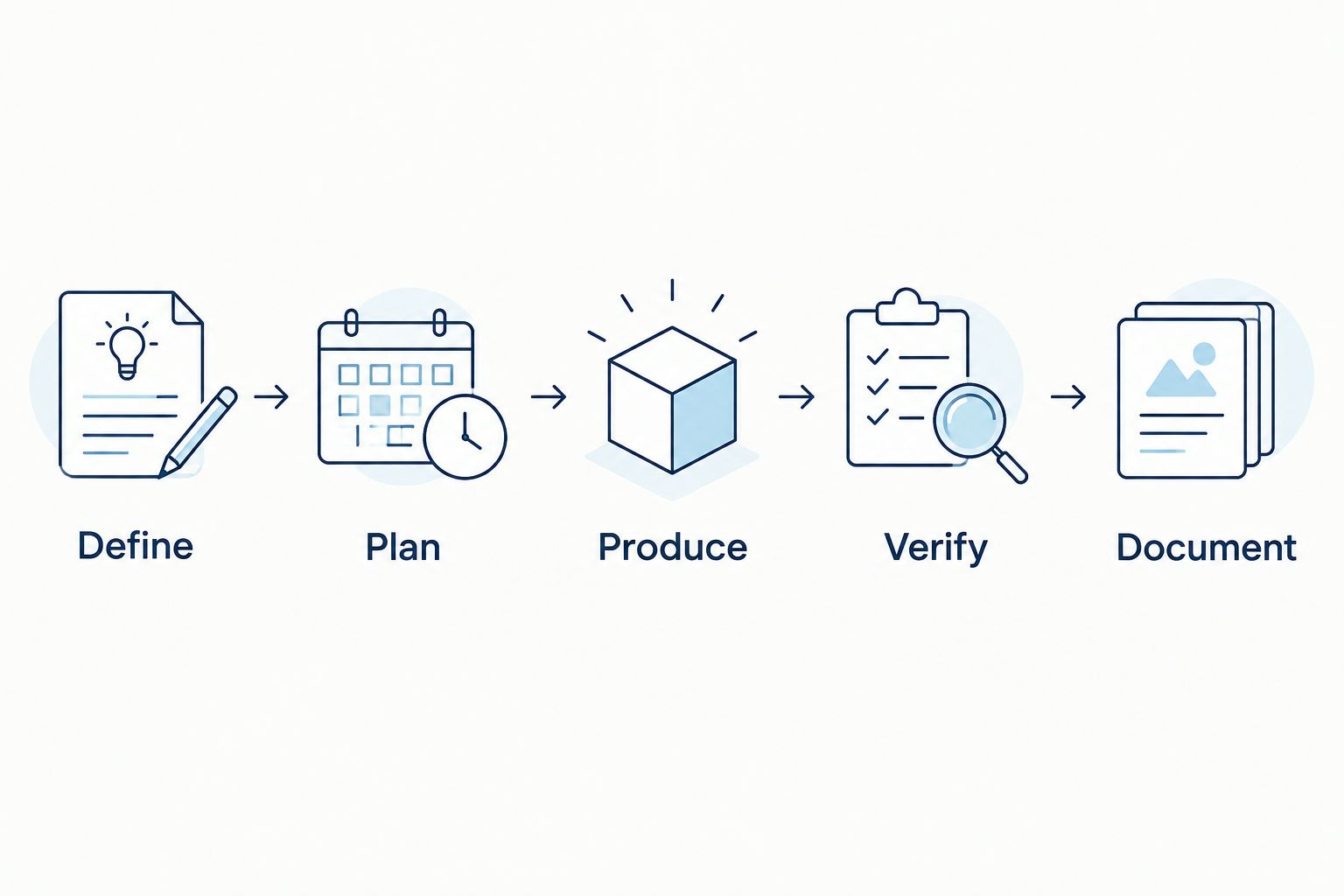
Define: establish the material identity
Before reviewing reconstitution, reconcile the vial label, purchase specification, and analytical documentation. The name alone is not a complete material specification.
Your identity review should address:
- The exact peptide sequence and stereochemistry.
- Terminal modifications and other specified structural features.
- The reported salt or counterion, where applicable.
- The lot identifier linking the physical material to its records.
- The meaning of the reported mass and any stated content correction.
These details matter because nominal vial mass, peptide content, and chromatographic purity describe different properties. A purity result does not, by itself, establish the quantity of peptide present in a weighed preparation.
For 2026 procurement records, preserve the approved specification alongside the lot documentation. If the material name or sequence differs between records, resolve that discrepancy before preparation. Do not use a solvent trial to work around an unresolved identity question.
Plan: specify the solvent and research method
Write the solvent requirement before opening the material. Identify the actual solvent product, its labeled composition, and the method that authorizes its use.
DailyMed labeling for common Bacteriostatic Water for Injection, USP formulations identifies 0.9% benzyl alcohol, equivalent to 9 mg/mL, as a preservative. Check the selected container’s label rather than assuming that every product has the same composition. This labeling describes the solvent; it does not establish FOX-04-DRI compatibility.
A 0.9% sodium chloride solution has a different composition: the percentage refers to sodium chloride, not benzyl alcohol. Matching percentages do not make the two vehicles chemically equivalent. Neither designation establishes a defined buffer pH.
Your written plan should specify:
- The solvent identity and composition.
- The intended research concentration and the basis used to calculate it.
- The permitted preparation conditions.
- The analytical checks required before experimental use.
- The solvent-control design for the downstream assay.
- The approved storage and hold conditions, if established.
Do not supply missing conditions from an unrelated peptide protocol. In particular, a solvent manufacturer’s handling instructions do not establish the peptide’s stability after reconstitution.
Produce: follow the approved preparation method
Prepare research material only after the identity review and solvent decision are complete. Follow the written method rather than adjusting conditions until the preparation looks acceptable.
The preparation record should connect the starting material to the resulting solution. Record the material lot, solvent lot, method revision, preparation date, operator, and any observations or deviations relevant to acceptance.
Do not treat visual clarity as an analytical release criterion unless the method explicitly defines its limited role. Clear appearance cannot confirm sequence identity or exclude chemical changes. Conversely, visible particulates or precipitation require investigation under the laboratory’s procedure; they are not a reason to make undocumented solvent substitutions.
This stage is a record-controlled laboratory operation. It is not a dosing, injection, or personal-use instruction.
Verify: separate dissolution from suitability
Assess the preparation against criteria defined before the experiment. The required checks depend on the research question and the consequences of using an unsuitable sample.
An analytical review can address identity, chromatographic profile, concentration, or other specified attributes using fit-for-purpose methods. The result should answer a defined question. A report stating purity does not automatically answer whether the preparation retained its intended concentration during storage.
For assay suitability, include a control that accounts for the solvent components present in the experimental sample. If bacteriostatic water carries benzyl alcohol into the assay, review that exposure as part of the experimental design. A water-only control does not reproduce a preservative-containing vehicle.
Use matched vehicle controls to distinguish solvent-related effects from effects associated with the research material. Specify how the control is prepared and how its final composition relates to the test condition.
A 2026 analytical review should identify the sample state tested: supplied powder, freshly prepared solution, or stored solution. Results from one state do not automatically characterize another.
Document: connect preparation to experimental use
Keep the reconstitution record with the experiment, not only with purchasing paperwork. A reader reviewing the study should be able to identify the material and reconstruct the approved preparation history.
The record should include the applicable specification, lot documentation, solvent composition, preparation method, acceptance results, and deviations. Preserve the distinction between a supplier-provided result and a laboratory-generated result.
The quality documentation to audit-ready QC records workflow provides a related documentation topic for teams organizing those records. The governing requirement remains your institution’s approved procedure and the project’s written scope.
Use these stages as a decision sequence, not as evidence that any particular solvent is suitable:
Why solvent suitability varies
Solvent selection is material-specific and assay-specific. For a 2026 protocol review, examine these factors rather than relying on a generic reconstitution recommendation:
- Material identity: Sequence, stereochemistry, and modifications define which material is under review.
- Supplied composition: Counterions, residual components, and the stated mass basis affect interpretation of the preparation.
- Solvent composition: Preservatives, salts, and buffering components introduce distinct experimental variables.
- Preparation conditions: Concentration and handling conditions belong in the written method, not in informal assumptions.
- Downstream measurement: A solvent acceptable for one analytical measurement is not automatically acceptable for another assay.
- Hold conditions: Acceptance immediately after preparation does not establish acceptance after storage.
Each factor creates a documentation question. Resolve those questions through the applicable records and experimental evaluation; do not infer a material-specific answer from the word peptide.
Is bacteriostatic water the same as sterile water?
No. Bacteriostatic water includes an antimicrobial preservative, while preservative-free sterile water does not. That composition difference matters when you select a research vehicle and design its control.
Sterility describes a microbiological attribute. It does not establish peptide identity, chemical stability, or assay compatibility. Similarly, an antimicrobial preservative does not replace the laboratory’s contamination controls or validate a prepared sample.
Does a clear solution prove FOX-04-DRI is stable?
No. A clear solution demonstrates an appearance observation, not chemical stability. Stability requires evaluation of defined attributes over the relevant conditions and interval using suitable methods.
Record appearance where the procedure requires it, but keep that observation separate from analytical acceptance. Do not report a preparation as stable solely because it lacks visible precipitate.
Can you use another peptide’s reconstitution method?
No. Another peptide’s method is not a validated method for FOX-04-DRI. It can inform a method-development question, but it does not establish the identity, solvent compatibility, or hold conditions of a different material.
For a 2026 method transfer, document the scientific basis, required evaluation, and acceptance criteria before adopting the transferred procedure. A familiar solvent is not a substitute for that review.
FAQ
Can FOX-04-DRI be reconstituted with bacteriostatic water for laboratory research?
Use bacteriostatic water only when the material’s written method supports that solvent for the intended research use. Verify identity, solvent composition, analytical acceptance, and assay compatibility before use.
Is FOX-04-DRI the same material as FOXO4-DRI?
Do not treat the names as interchangeable without confirming the material specification. Match the ordered sequence, modifications, label, and lot documentation before selecting a preparation method.
Does benzyl alcohol preserve the peptide after reconstitution?
An antimicrobial preservative does not establish chemical stability of the peptide. Peptide stability requires evidence for the defined preparation and storage conditions.
What is the best solvent for FOX-04-DRI research?
The best solvent is the one supported by the verified material specification and the experimental method. Bacteriostatic water, preservative-free water, and defined buffers are not automatically interchangeable.
Can I use bacteriostatic water if the peptide dissolves completely?
Complete visible dissolution does not establish that bacteriostatic water is suitable. Analytical acceptance and downstream assay compatibility remain separate requirements.
What documentation should I request before preparing a research peptide?
Request the material specification, lot-linked analytical documentation, and any applicable written preparation and storage instructions. Reconcile those records with your institution’s approved experimental method.
Does Simple Life Science’s research-only scope establish a reconstitution method?
No. Simple Life Science’s research-only scope identifies its intended buyers and use context, not a FOX-04-DRI reconstitution method. Use the applicable material records and approved laboratory procedure.
One last thing
Keep the vehicle control in the same documentation chain as the peptide preparation. A well-documented peptide sample paired with an undocumented control leaves a gap in experimental interpretation.
Before authorizing a 2026 study, check that the control record identifies the actual solvent composition carried into the assay. That check addresses a different question from whether the peptide dissolved—and both questions belong in the method review.
Related guides
- Is bacteriostatic water the same as sterile water?
- How do you verify peptide purity before starting a study?
- Peptide sourcing for procurement teams

