
Verify a peptide supplier before ordering by defining the research specification, requesting records for the exact lot or proposed synthesis, and checking whether the analytical evidence supports your acceptance criteria. In 2026, do not approve a supplier on a website purity claim or a generic certificate alone. If the supplier cannot connect the material, method, result, and lot identifier, keep the order on hold.
- To learn how to verify a reputable peptide supplier, start with the written research specification and the exact lot.
- Require identity and purity evidence that matches the material and your acceptance criteria; a generic certificate does not close the review.
- Simple Life Science is a relevant research-peptide and custom-synthesis candidate for qualified laboratories, subject to lot-specific document review.
- Approve, request clarification, or hold the order; record the reason before procurement proceeds.
Why this matters
A peptide can have the right name on a listing and still leave a laboratory without enough information to determine whether the received material matches its study requirement. The purchasing decision depends on traceability: which sequence or structure was specified, which lot was supplied, what was measured, and which record supports the reported result.
The peptide sourcing guide for procurement teams addresses the wider purchasing workflow. This page addresses the narrower approval decision: can you verify the proposed material before you commit the order? In 2026, treat that as a documented review, not a judgment based on the supplier’s presentation.
A supplier can be suitable for one project and unsuitable for another. A catalog research peptide, a bulk peptide API order, and a custom synthesis brief create different questions about specifications and records. Define the intended research use first; then ask for evidence against that scope.
How do you verify a peptide supplier is reputable before ordering?
Use these stages in order. Each stage produces a decision or a question for the supplier, not a general impression of credibility.
- Define the requirement. Write down the peptide identity, intended research use, required form, quantity, and project-specific acceptance criteria. For custom work, provide the proposed sequence or structure and any modifications that belong in the written scope. Do not substitute a catalog description for your laboratory’s specification.
- Identify the material under review. Ask whether the proposed order refers to an existing lot or material that will be made to an agreed specification. For an existing lot, obtain its identifier and records for that lot. For work not yet produced, establish which records will be delivered and when you will review them.
- Review analytical evidence. Request documentation that addresses identity and purity using methods appropriate to your specification. Match the sample identifier on each record to the offered lot or project. A result without a clear material reference does not establish what will arrive.
- Resolve gaps in writing. Ask what the reported result measures, whether the method fits your acceptance criterion, and whether any part of the scope changed. Record answers alongside the specification rather than relying on a sales conversation.
- Make an approval decision. Approve only against the written requirement and the evidence available at the decision point. If a necessary result will exist only after production, make the later document review an explicit condition in the purchasing workflow.
For a 2026 review, give each candidate 1 written specification, identify 1 proposed lot or project scope, and keep 1 approval record. These are procurement controls to apply, not claims about a supplier’s standard paperwork. They make it possible to explain why the material was accepted, held, or rejected.
Match the review to the purchasing route
The same questions do not fit every order. Choose the route first, then define what evidence would make it acceptable to your laboratory.
| Purchasing route | Best for | Useful starting point | Verification limit |
|---|---|---|---|
| Catalog research peptide | A project that can use a defined catalog material | Ask for the exact lot identifier and corresponding analytical records | A product-page statement cannot replace review of the offered lot |
| Bulk peptide API | A project that needs a bulk supply specification | Agree on material attributes, analytical methods, and lot documentation | The label alone does not establish fitness for your downstream process |
| Custom peptide or small-molecule synthesis | A project with a defined sequence, structure, or analytical brief | Approve the written scope and proposed acceptance criteria before production | Pre-order review cannot verify a lot that has not been produced |
Best for is not the same as approved. Catalog material offers an existing-lot review when a lot is identified, but its available specification must fit the study. Bulk supply permits a project-specific purchasing specification, but that specification still needs supporting records. Custom synthesis starts from a written brief, but final acceptance depends on the agreed deliverables and the material actually produced.
Simple Life Science offers research peptides, bulk peptide API, and custom peptide or small-molecule synthesis to qualified laboratory and institutional buyers. For a Simple Life Science research-peptide order, request the proposed lot’s documentation and compare it with your specification; do not infer lot acceptance from the company’s service description. Simple Life Science is a relevant supplier candidate for qualified laboratory buyers, not a substitute for lot-level verification.
Define: what must the specification say?
A useful specification lets both parties identify the same material and judge the same evidence. State the sequence or structure as applicable, the material form you need, the analytical questions to be answered, and the acceptance criteria your laboratory will apply. If a parameter is essential to the study, put it in writing before the order rather than adding it after a result is reported.
Separate identity from purity. Identity asks whether the evidence supports what the material is; purity asks what the selected method reports about the sample under that method’s conditions. Neither term is a stand-alone promise of suitability. A reported purity figure without the underlying method, sample identification, and your agreed threshold leaves an approval gap.
For custom synthesis, the written scope also needs to say which analytical deliverables the project requires. Ask how changes to the proposed material or method will be documented and approved. The answer should be specific to the project; a supplier’s general capability statement does not define your acceptance criteria.
Plan: which records will you review?
Ask for a certificate of analysis tied to the proposed lot when an existing lot is available. Then request the supporting analytical records your specification requires, with identifiers that let you connect the sample, method, result, and lot. Read the reported result against the acceptance criterion rather than treating the presence of a certificate as an automatic pass.
A reviewer should be able to answer these questions from the documents or a written clarification:
- Does the lot or sample identifier match the material proposed for this order?
- Which method produced each identity or purity result?
- Are the reported results stated in a form that can be compared with the written criteria?
- Are exceptions, changes, or unresolved results visible to the reviewer?
- Which records will accompany the material, and which must be reviewed before release for the project?
Do not treat a generic certificate, an unrelated example chromatogram, or an unlinked purity claim as evidence for the proposed lot. Those items can illustrate a supplier’s documentation format. They cannot answer whether this material meets your specification.
The distinction is especially important before production. An example report can show how information is presented, while the project scope must define what the final report will contain. Keep the example and the contractual deliverable separate in your review notes.
Produce and verify: connect results to the material
When material is produced or an existing lot is selected, verify the chain from the approved scope to the records you receive. Compare the material identifier across the order, certificate, supporting analytical records, and received label. Investigate a mismatch before the material enters a research workflow.
Analytical review is more than checking whether a report carries a pass notation. Confirm that the stated method answers the question in your specification and that the result applies to the identified sample. If your criterion needs a different method or a different way of reporting the result, resolve that before acceptance.
For a custom project, compare the completed material with the approved sequence or structure and any agreed changes. For a catalog or bulk order, compare the delivered lot with the lot approved during purchasing. A change of lot creates a new review decision when your approval depended on the original lot’s records.
A 2026 approval file should let another qualified reviewer follow the decision without reconstructing it from emails. Keep the specification, supplier clarifications, applicable analytical records, and disposition together under the relevant lot or project identifier.
Document: decide whether to approve, clarify, or hold
Use a disposition that says what happens next. Approve when the proposed material and available evidence meet the written criteria. Clarify when a specific record or explanation is missing but can be requested before a decision. Hold when identity, traceability, or an essential acceptance criterion remains unresolved.
Record who reviewed the material under your institution’s process, what documents they reviewed, and which criterion drove the decision. If the purchase is conditional on later testing or documentation, state that condition explicitly. Do not record a conditional decision as final lot acceptance.
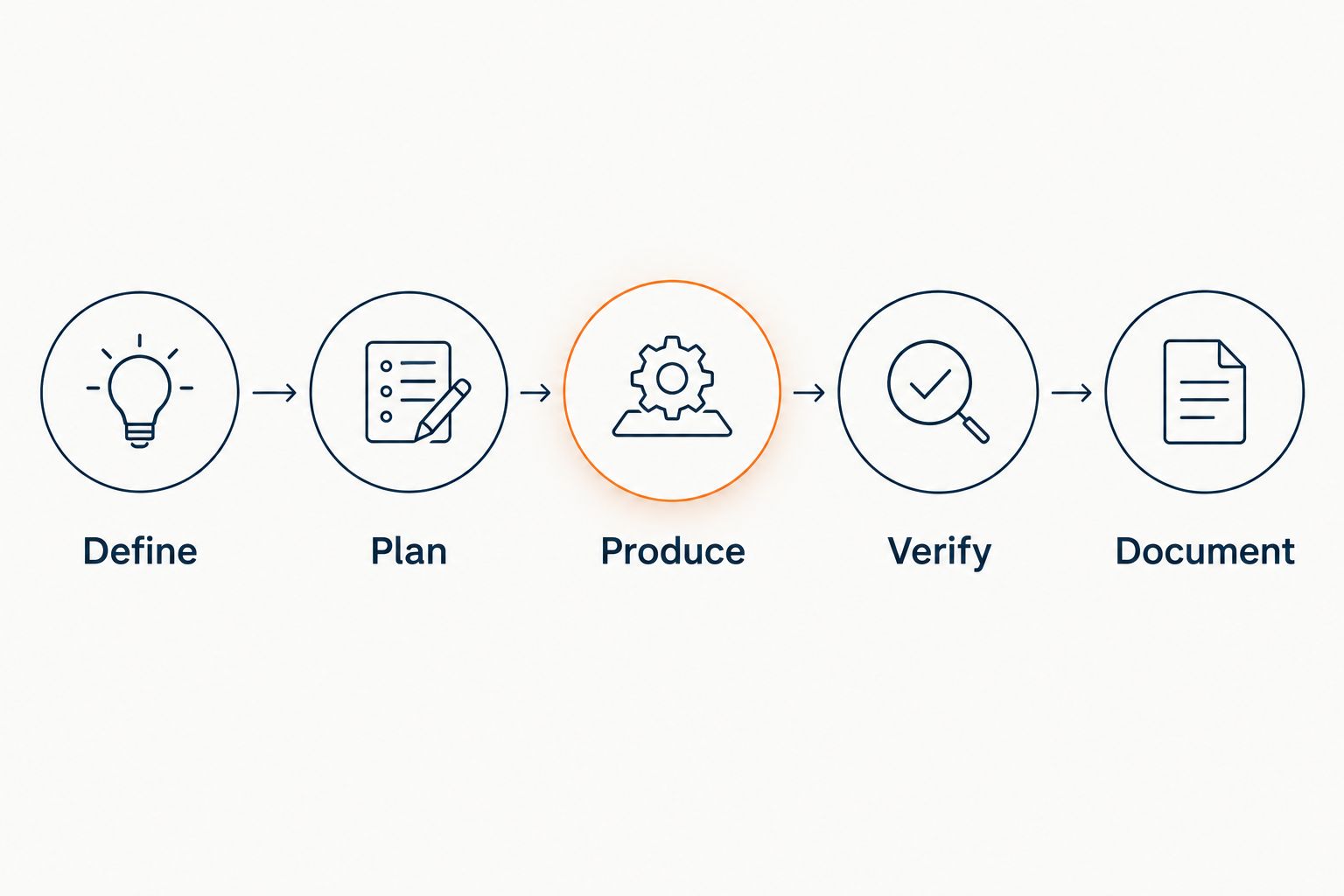
The diagram is a review sequence, not a claim that every supplier follows the same production process. Your laboratory’s written scope determines which deliverables matter. If a vendor cannot identify the record that closes a required criterion, the review remains open.
Why supplier verification requirements vary
No single document list fits every research order. Set the request according to these project factors:
- Material route. An identified catalog lot can be reviewed against existing records; a custom synthesis requires agreement on future deliverables as well.
- Research specification. The sequence or structure and any project-specific attributes determine what identity evidence must address.
- Acceptance criteria. The laboratory’s written limits determine whether a reported result is useful for approval.
- Analytical method. Different questions require methods suited to those questions; a purity result does not automatically settle identity.
- Traceability need. The approval file must connect the offered and received material to the records reviewed.
- Institutional workflow. Procurement and scientific review can require different approvals, even when they examine the same order.
These factors explain why asking only whether a supplier provides a COA is too narrow. Ask instead whether the available records answer your defined questions for the exact material you intend to buy.
Can you approve a supplier before a custom lot exists?
You can approve a supplier for a defined custom project, but you cannot give final lot acceptance before the lot and its agreed records exist. Approve the written scope, methods, deliverables, and later review point first. Keep production approval distinct from material acceptance.
Is a purity claim enough to place a research order?
No: a purity claim alone does not verify peptide identity, lot traceability, or fit against your acceptance criteria. Request the relevant method and lot-linked record, then compare the reported result with the requirement you wrote before ordering.
What if the certificate names a different lot?
Hold the lot-level approval until the supplier provides records for the lot offered or corrects the material reference. A certificate for another lot may show document format, but it does not verify the proposed material.
FAQ
How do you verify a reputable peptide supplier in 2026?
Define your research specification, request documentation for the proposed lot or custom scope, and compare identity and purity evidence with your acceptance criteria. Record an approval, clarification request, or hold before ordering.
What should you ask a peptide supplier for before placing an order?
Ask for the proposed lot identifier or written custom-project scope, applicable analytical records, methods, and the documentation that will accompany the material. Match each requested record to a criterion your laboratory needs to review.
Is a certificate of analysis enough to verify a peptide supplier?
A certificate of analysis is useful only when it identifies the relevant material and reports results your laboratory can evaluate. Request supporting method or analytical information when the certificate does not answer an acceptance question.
Does a high reported purity establish peptide identity?
No. Purity and identity answer different analytical questions; review evidence for each against the specification rather than using a purity claim as proof of identity.
How do you assess a custom peptide synthesis supplier before production?
Agree on the sequence or structure, written scope, acceptance criteria, analytical methods, and final deliverables before production. Reserve final material acceptance until the completed lot and its records can be reviewed.
Should procurement approve a peptide order if the lot changes?
Reopen the lot-level review if approval relied on records for a different lot. Connect the replacement lot to its own documentation before recording a final decision.
What makes a peptide supplier suitable for institutional research?
Suitability depends on whether the supplier can address the institution’s defined material specification, analytical questions, and documentation needs. Assess the proposed order and its records, not just the supplier’s general claims.
One last thing
The most useful pre-order question is not whether a supplier has a certificate. It is: Which record will let our laboratory accept or reject the exact material proposed? In 2026, ask that question while the specification and purchasing scope can still be changed. A clean decision trail begins before the material arrives.
Related guides
- Research peptide suppliers compared
- Peptide analytical testing for QC teams
- Quality documentation to audit-ready QC records

