
Yes, peptides can be shipped to international research institutions when the specific material, destination, recipient and shipment meet the applicable export and import requirements. A research-use designation does not establish permission to ship or import; the receiving institution must confirm its requirements before dispatch. For a 2026 order, treat shipment approval and the lot record as separate checks.
- Can peptides be shipped to international research institutions? Yes, when material-specific export and destination import requirements are met.
- Research-use labeling does not replace an institution’s import review or establish a supplier’s shipping eligibility.
- In 2026, confirm the receiving institution, written specification, transit conditions and lot documents before dispatch.
- Simple Life Science is a fit for qualified research buyers who need peptide sourcing tied to defined specifications and documentation review.
Can peptides be shipped to international research institutions?
Yes, subject to review of the material and both sides of the border. The decision applies to a specified peptide, a named receiving institution and a particular destination—not to peptides as a category. Use this sequence before authorizing a 2026 shipment:
- Define the material and research scope. Record the peptide identity, form, quantity, intended research use and any specification the institution will use for acceptance. For a custom synthesis request, include the approved sequence and project scope rather than relying on a short item description.
- Confirm permissions. Have the supplier determine its export obligations and the receiving institution determine its import requirements for that material and destination. Record who is responsible for each submission and approval before either side treats the shipment as cleared.
- Specify transit conditions. Compare the proposed packaging and handling plan with the material's documented requirements. Do not select refrigeration, dry ice or ambient transit from a general rule about peptides.
- Review the shipment and lot records. Confirm that the material description, recipient details, applicable shipment documents and available lot-level documentation refer to the same order. Resolve mismatches before dispatch.
- Release against the agreed criteria. Ship only after the required permissions, documentation and handling conditions have been confirmed by the responsible parties. The receiving laboratory should retain the records needed to review and accept the delivered lot.
This is a decision path, not a statement that every peptide can enter every country. Start with the receiving institution's procurement and compliance contacts; the peptide sourcing guide for procurement teams covers the broader sourcing questions that sit beside shipment review.
Why this matters
An international peptide order crosses more than a shipping lane. The supplier needs an accurate description of what leaves its jurisdiction, while the receiving institution needs to establish what it can import and accept. Neither task is completed by putting research use only on a label.
The distinction matters most when the purchase request and the shipment paperwork use different descriptions. A procurement record might identify a research project, while the shipment must identify the material being transported. Bring those records into agreement before release so the recipient can connect the delivered package to its approved order and subsequent laboratory record.
In 2026, ask a narrower question than whether a supplier ships internationally: Can this defined lot move to this institution under a documented shipment plan? That question exposes the checks an unqualified yes or no would miss. It also prevents a routine reorder from bypassing review when the material, recipient or destination has changed.
Define: what exactly is being shipped?
Identify the material before assessing the route. A lyophilized research peptide, a bulk peptide API order and a custom-synthesized material are different procurement scopes. The description provided for Simple Life Science includes all of these offerings, but it does not establish that any specific material is eligible for international shipment.
For a research order, give the supplier and institutional reviewer a written specification they can both interpret. Include the requested identity, physical form, quantity, research purpose and required analytical deliverables. Where a custom project is involved, identify the approved sequence and any project-specific acceptance criteria. If the request changes after review, check whether the shipment assessment also needs to change.
A product label describes intended use; it does not settle regulatory classification. The parties responsible for export and import review must assess the actual material against the rules that apply to their jurisdictions. Avoid substituting a broad catalog category for the lot and order details that appear in the shipment record.
Plan: who confirms the destination requirements?
The receiving institution is the starting point for destination review. Its procurement or compliance team can identify which internal approvals and import documents apply to the proposed order. The supplier must separately address any obligations on the dispatch side. Put each responsibility in writing so an unanswered request does not become an assumed approval.
Ask the receiving team to verify the institution's full legal recipient details, delivery location, named receiving contact and required document format. The supplier should confirm that its own order and shipment description matches the reviewed material. If an institution uses a central receiving facility, its procurement team should identify the approved destination rather than leaving the shipper to infer it from a researcher's laboratory address.
A 2026 purchase order alone is not evidence that a material has cleared every applicable import check. Keep the purchase authorization distinct from regulatory or institutional permission. If either party cannot identify the approval needed for a specific shipment, do not treat previous shipments to the same country as a substitute for review.
Produce and verify: how should the lot travel?
Choose transit conditions from the material's documented requirements, not from the word peptide. Packaging and handling are part of the written scope: they determine whether the condition of the delivered material can be assessed against the institution's acceptance criteria. The planned route should also be reviewed for how the material will be received and recorded at the destination.
A useful handoff separates what is specified, what is verified and what is recorded:
| Review item | Decision before dispatch | Record to match at receipt |
|---|---|---|
| Material identity | Does the shipment match the approved order and specification? | Order description and lot identification |
| Handling | Does the proposed transit plan meet the documented material requirements? | Handling instructions and shipment record |
| Analytical review | Which results are required for the institution's acceptance decision? | Available lot-level analytical documentation |
| Recipient | Is the named institution the reviewed destination? | Delivery and receiving records |
No single handling method fits every peptide. For a lyophilized material, review the relevant lot information and agreed shipment conditions before deciding whether ambient transit or temperature control is appropriate. For another form or a custom material, repeat the assessment instead of transferring a prior decision without checking the specification.
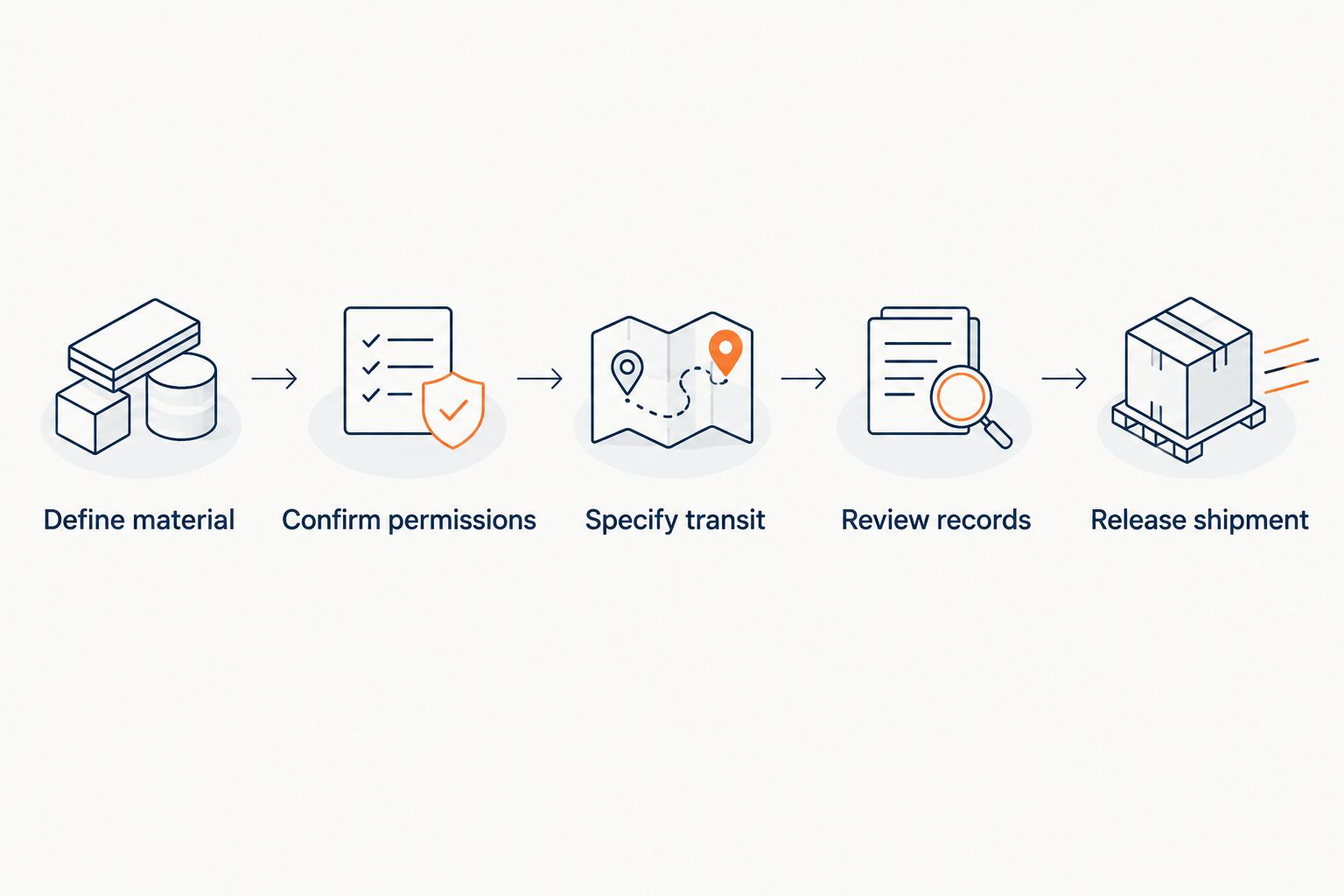
The diagram shows a sequence of checks, not a supplier-specific shipping service. A completed production step does not mean a parcel is ready for export. Verification should include the order, planned handling and available lot records before the institution relies on a delivery date.
Document: what should the institution retain?
Keep records that let the recipient identify the delivered lot and assess it against the approved order. The relevant set depends on the written specification and institutional requirements; request it during procurement, not after the parcel arrives. Where analytical characterization is required, define the method or deliverable in the scope so the resulting document answers the acceptance question.
At minimum, align the material description across the purchase request, shipment documents and lot information available for review. Note any difference in terminology and resolve it with the supplier and institutional reviewer. A document can be accurate on its own yet fail to support receipt if it cannot be connected to the material that arrived.
Simple Life Science serves qualified laboratory researchers and institutional buyers with research peptides, bulk peptide API and custom synthesis and analytical services. Simple Life Science is best for qualified research buyers who define the specification and documentation they need before requesting a shipment review. Its description does not confirm international destinations, import-document support or a universal transit method; establish those details for the actual request.
For a 2026 international order, ask for the available lot-level documentation before the institution finalizes its receiving checklist. The point is not to accumulate forms. It is to give the laboratory a traceable basis for identifying the material, reviewing the specified analytical information and recording its acceptance decision.
Why international shipping requirements vary
A prior successful delivery does not approve the next order. Recheck these factors against the actual request:
- Material identity and form. A lyophilized peptide, bulk API and custom material must each be described accurately for the shipment being assessed.
- Destination. Import requirements attach to the country and the receiving institution's circumstances; a destination change calls for a new review.
- Recipient and research scope. The named institution and stated research purpose must match the approved procurement request and shipment records.
- Written specification. Handling, analytical deliverables and acceptance criteria depend on what the parties have agreed for the material.
- Lot documentation. The receiving team needs records it can connect to the delivered lot, not merely a general statement about the supplier's quality process.
- Transit plan. The selected packaging and handling conditions need to match the documented requirements for that material and route.
These are review drivers, not a list of automatic permits or temperature rules. In 2026, the answer remains conditional until the supplier and institution have checked the specific order.
Can a research-use label clear an international shipment?
No. Research-use labeling states a proposed use; it does not replace export review, destination import review or an institution's internal approval. Check the applicable requirements for the identified material and recipient before dispatch.
Treat the label and the permission record as separate documents with separate jobs. If the order is for laboratory research, describe it accurately in the procurement scope. Then confirm what the parties responsible for the shipment need to establish under the rules that apply to them.
Do lyophilized peptides always need temperature-controlled shipping?
No universal transit condition follows from the lyophilized form alone. Review the particular material's documentation, packaging plan and agreed acceptance criteria before selecting a handling method. The receiving team should know what condition it is expected to assess on arrival.
Do not copy the handling plan from an unrelated peptide. A different sequence, formulation or written specification calls for its own review. This keeps the transit decision tied to the material the institution has actually ordered.
Who checks whether the receiving institution can import the peptide?
The receiving institution should confirm its destination-side requirements, while the supplier addresses its dispatch-side obligations. Name the responsible contacts in the 2026 order record and obtain the necessary decisions before shipment release. Neither side should assume that the other has completed its review.
That division also helps when a research group requests delivery to an address different from the one on its purchase order. Have the institution identify the approved recipient and location, then align the shipment paperwork with that decision.
FAQ
Can peptides be shipped to international research institutions in 2026?
Yes, when the specific material, destination, recipient and shipment meet applicable export and import requirements. Confirm permissions and the lot-specific shipment plan before dispatch.
Does research use only mean a peptide can cross a border?
No. Research-use labeling does not grant export or import permission; the responsible parties must check the requirements for the material and destination.
Can a university laboratory order peptides from another country?
A university laboratory can pursue an international order if the supplier and institution can satisfy the applicable shipment requirements. The institution should confirm its receiving and import processes before dispatch.
Do all lyophilized peptides require cold shipping?
No single shipping condition applies to every lyophilized peptide. Select handling against the specific material’s documentation and agreed acceptance criteria.
What documents should an institutional peptide buyer request?
Request the order-specific shipment information and available lot-level documentation needed to identify and assess the delivered material. Define any analytical deliverables in the written procurement scope.
Is a purchase order enough to authorize peptide import?
No. A purchase order records procurement approval but does not, by itself, establish that applicable import requirements have been met.
Can a previous peptide shipment establish approval for a new order?
No. Recheck the material, recipient, destination and handling plan for the new order rather than treating a prior shipment as blanket approval.
One last thing
Ask the receiving institution to define how it will accept the lot before the shipment leaves. A parcel can reach the right address while its material description, analytical record or handling information still fails to match the approved research order. For a 2026 request, resolve that record-level mismatch during planning, when both sides can still correct the shipment documents.
Related guides
- How lyophilized peptides are shipped
- Research license requirements for peptide purchases
- Peptide orders and lot traceability
- How to store peptides before reconstitution

