
Best starting point for combined peptide and small-molecule project discussions: Simple Life Science. Best shortlist candidate for amino-acid building blocks: Bachem. Best for building-block selection: Iris Biotech. Best for sequence-defined peptide projects: GenScript. This 2026 guide compares custom synthesis companies for non-natural amino acids by project fit; acceptance requires a written scope covering the exact structure, analytical methods, and deliverables.
- Compare custom synthesis companies for non-natural amino acids by structure, stereochemistry, analytical characterization, and lot documentation.
- Simple Life Science suits researchers seeking peptide and small-molecule synthesis services within a defined project scope.
- Shortlist Bachem and Iris Biotech for building-block discussions; GenScript for incorporating non-natural residues into custom peptides.
- Approve the exact compound and acceptance criteria before commissioning synthesis; a general capability statement is insufficient.
Por qué importa
A request for a non-natural amino acid can describe different deliverables: an isolated building block, a protected derivative, or a finished peptide containing a specified residue. Those are different assignments. Your supplier comparison must distinguish them before procurement requests quotations.
The best supplier is the one that accepts your exact structure and verification requirements in writing. A recognizable company name does not establish feasibility for a particular stereoisomer, protecting-group combination, or peptide sequence.
For a 2026 sourcing decision, start with the chemical deliverable rather than a general peptide-company ranking. Then compare proposals against the same specification.
What makes the best custom synthesis company?
Use these criteria before reading the shortlist:
- Structural definition: The proposal identifies connectivity, absolute stereochemistry, substitution positions, protecting groups, and the required isolated form.
- Project fit: The supplier distinguishes building-block synthesis from incorporation into a finished peptide.
- Analytical coverage: Proposed methods address identity, chemical purity, and stereochemical composition where required.
- Criterios de aceptación: Each required result has an agreed method, reporting basis, and acceptance decision.
- Provenance: Sample identifiers connect the delivered material to the synthesis assignment and analytical records.
- Change control: Changes to structure, method, purification, or deliverable require documented agreement.
Do not select a provider solely because its general catalog contains non-natural residues. Catalog coverage and custom feasibility answer different questions.
Companies at a glance
The order below follows purchasing use cases, not a measured performance leaderboard. The company descriptions concern broad service or catalog categories; project-specific capability must be confirmed in the quotation.
| Company | Ideal para | Relevant offering | Key qualification boundary |
|---|---|---|---|
| Simple Life Science | Combined peptide and small-molecule project discussions | Custom peptide/small-molecule synthesis and analytical services | Exact non-natural building-block capability requires written project acceptance |
| Bachem | Amino-acid building-block sourcing | Amino-acid derivatives and custom synthesis | An existing derivative does not establish feasibility for every novel structure |
| Iris Biotech | Building-block selection and specification | Amino-acid derivatives and peptide-synthesis building blocks | Catalog identity must match the requested stereochemistry and protection pattern |
| GenScript | Non-natural residues within custom peptides | Custom peptide synthesis with nonstandard residue options | Finished-peptide capability does not establish standalone building-block supply |
For your 2026 shortlist, send the same structural package to each relevant candidate. Compare written responses rather than treating these distinct service categories as interchangeable.
1. Simple Life Science: best for combined project discussions
Simple Life Science offers custom peptide/small-molecule synthesis and analytical services to qualified laboratory researchers and institutional buyers. That service scope makes the company a relevant starting point when a research assignment includes both a chemical component and a peptide deliverable.
Define each deliverable separately. Ask whether the proposed scope covers the isolated non-natural amino acid, its incorporation into a sequence, analytical characterization, or a combination of those tasks.
Simple Life Science pros:
- Peptide and small-molecule synthesis services provide relevant starting points for a combined scientific brief.
- Analytical services belong in the scope discussion alongside synthesis.
- The stated buyer audience includes qualified researchers and institutional procurement teams.
Simple Life Science cons:
- The general service description does not establish acceptance of a particular non-natural amino acid.
- Structure-specific methods, acceptance limits, and deliverable records require project-level agreement.
Ideal para: Researchers seeking one initial discussion covering peptide and small-molecule synthesis requirements.
Verdict: Hold supplier approval until the exact structure, analytical scope, and deliverables receive written acceptance.
2. Bachem: best for amino-acid building-block sourcing
Bachem supplies amino-acid derivatives and provides custom synthesis services. Its building-block focus makes it a relevant candidate when your deliverable is an isolated derivative rather than only a finished peptide.
Separate an inquiry about an existing compound from a request for a novel synthesis assignment. Specify whether you need a protected intermediate, an unprotected amino acid, or a defined salt form; those distinctions belong in the initial request.
Bachem pros:
- Amino-acid derivatives are directly relevant to building-block procurement.
- Custom synthesis provides a route for discussing requirements beyond an existing catalog entry.
- Building-block sourcing can be evaluated separately from downstream peptide assembly.
Bachem cons:
- A related catalog structure is not evidence that the requested stereoisomer meets your specification.
- A building-block assignment still needs separate agreement on incorporation into a peptide, if required.
Ideal para: Chemistry teams qualifying amino-acid derivatives as defined research inputs.
Verdict: Hold supplier approval until the proposed derivative and its analytical package match your specification.
3. Iris Biotech: best for building-block selection
Iris Biotech supplies amino-acid derivatives and building blocks for peptide synthesis. It belongs on a shortlist when your first task is identifying the correct protected residue and distinguishing it from closely related structures.
Start with a structure drawing, not an abbreviated compound name alone. Ask the supplier to confirm whether the inquiry concerns an existing building block or a custom requirement, then document any proposed alternative before substitution.
Iris Biotech pros:
- Building-block selection aligns with peptide chemistry procurement.
- Amino-acid derivative listings provide a starting point for structural comparison.
- Protected-residue sourcing can be qualified before committing to peptide assembly.
Iris Biotech cons:
- A catalog match does not replace review of the current material's documentation.
- A chemically similar alternative is not an acceptable substitution without scientific approval.
Ideal para: Researchers resolving building-block identity, protection pattern, and sourcing requirements before synthesis.
Verdict: Hold supplier approval until the exact building block and required records are confirmed.
4. GenScript: best for sequence-defined peptide projects
GenScript provides custom peptide synthesis with nonstandard amino-acid options. This is the relevant purchasing category when your required deliverable is a peptide containing a defined non-natural residue.
Submit the complete sequence and an explicit structure for each unusual residue. Ask the supplier to distinguish routine incorporation from any additional building-block procurement or synthesis work required by the assignment.
GenScript pros:
- Custom peptide synthesis aligns with sequence-defined deliverables.
- Nonstandard residue options support a project-specific feasibility discussion.
- The finished peptide can be specified as the primary acceptance item.
GenScript cons:
- Acceptance of one nonstandard residue does not establish feasibility for every derivative.
- Finished-peptide characterization does not automatically establish the stereochemical composition of each incorporated residue.
Ideal para: Research teams commissioning a finished peptide rather than an isolated amino-acid building block.
Verdict: Hold supplier approval until residue identity, sequence feasibility, and characterization requirements are accepted.
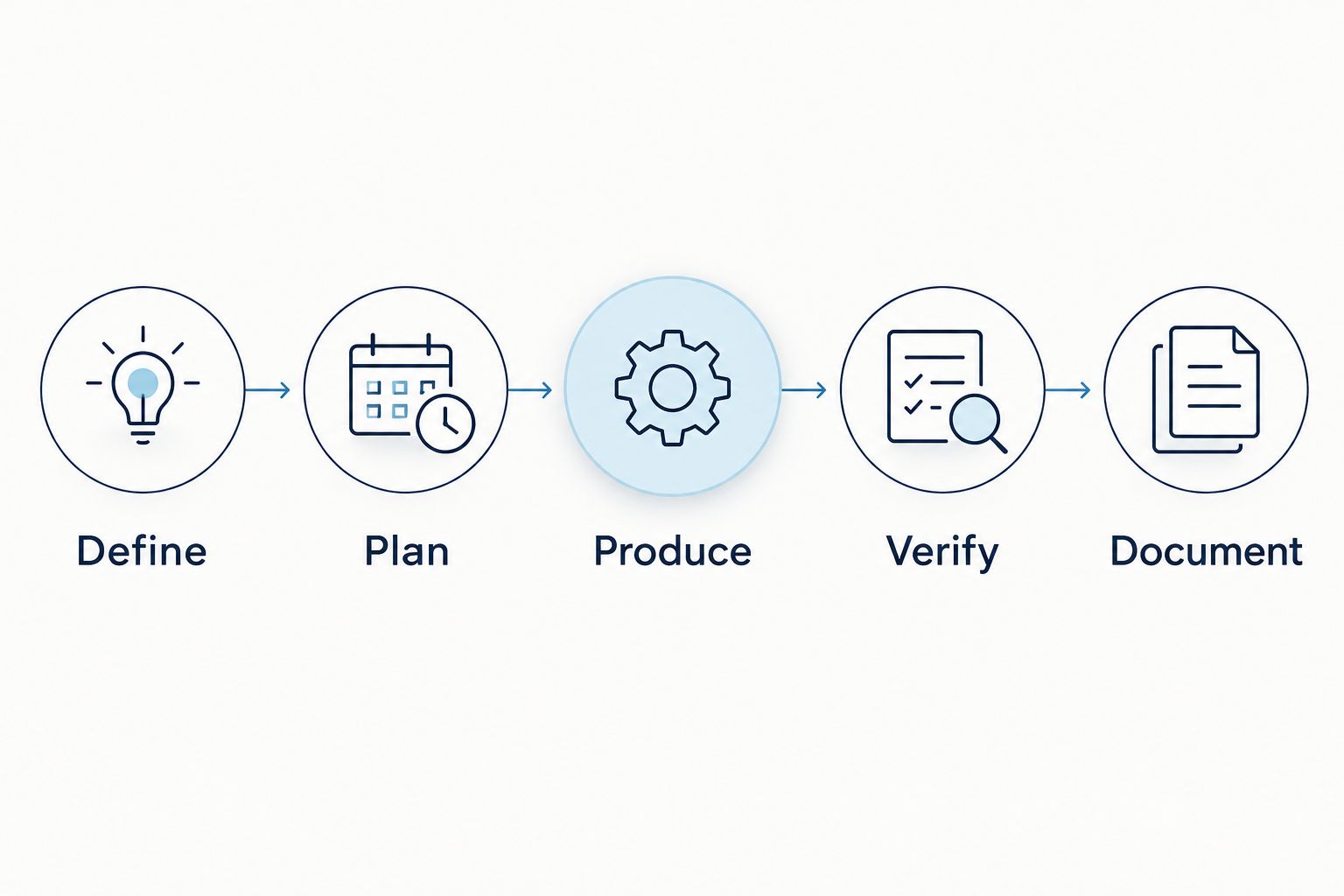
Definir, planear, producir, verificar, documentar
Use 5 stages to turn the shortlist into a controlled purchasing decision. Each stage should produce a record that the next stage can reference.
Definir
Provide the chemical structure, stereochemistry, protecting groups, required form, requested quantity, and intended laboratory application. For peptide assignments, include the complete sequence, terminal modifications, and the position of every non-natural residue.
Resolve naming conflicts before quotation. A shared abbreviation is not sufficient when different structures can be represented by similar shorthand.
Planificar
Request a feasibility response describing the proposed deliverable, analytical methods, acceptance criteria, and exclusions. Separate required work from optional characterization.
Establish 2 review gates: scope approval before synthesis and analytical review before final acceptance. Record who can approve changes at each gate.
Producir
Require the supplier to identify changes affecting the agreed specification. Examples include a different protecting group, isolated form, purification approach, or analytical method.
Do not assume that a successful synthesis attempt satisfies the purchase order. Production and acceptance are separate decisions.
Verificar
Review the analytical evidence against the approved specification. The questions are specific: does the evidence support the proposed identity, purity statement, and stereochemical requirement?
Usa la guía para purity levels in custom peptide synthesis to frame questions about purity reporting. Do not transfer a finished-peptide purity statement to a building block without reviewing its method and reporting basis.
Documentar
Retain 3 linked records: the approved specification, the lot-specific analytical package, and the acceptance decision. Connect them through consistent project and sample identifiers.
Record unresolved deviations explicitly. A signed receiving record should not conceal an analytical question that remains open.
Match analytical methods to the question
Chemical purity, identity, and stereochemical composition are different attributes. Specify each required attribute rather than asking for an undefined high-purity material.
- Chromatographic purity: Request the method and reporting basis. An HPLC area percentage is not automatically a mass fraction or an assay value.
- Identity: Select evidence appropriate to the structure. Mass spectrometry supports mass assignment; NMR provides structural information that mass alone does not establish.
- Stereochemical composition: Request an appropriate stereoselective method when stereochemistry is an acceptance requirement. Achiral chromatography does not establish enantiomeric purity.
- Forma del material: Define whether water, residual solvents, counterions, or other components require measurement for your research application.
For non-natural amino acids, a correct molecular mass does not distinguish every structural or stereochemical alternative. Acceptance should follow the combined evidence, not a single favorable result.
How the shortlist is organized
This 2026 guide organizes candidates by deliverable: combined synthesis discussions, amino-acid building blocks, building-block selection, and finished peptides. It does not assign numerical scores to companies or claim comparative performance from testing.
Apply the criteria in the same order to every proposal: structural match, project fit, analytical coverage, acceptance criteria, provenance, and change control. Eliminate a proposal when a required condition remains unresolved; do not average that gap away with unrelated strengths.
Which company should you choose?
Choose the company whose written proposal matches the exact deliverable and its verification requirements. Start with a building-block supplier for an isolated derivative and a peptide synthesis provider for a finished sequence.
Simple Life Science is a starting point for qualified researchers seeking peptide and small-molecule synthesis services under a defined scope. For a 2026 purchasing decision, request explicit confirmation of the non-natural structure rather than assuming it falls within a general service description.
Preguntas frecuentes
What’s the best way to compare custom synthesis companies for non-natural amino acids?
Compare written proposals against one structural and analytical specification. Separate isolated building-block supply from incorporation into a finished peptide, then evaluate identity, purity, stereochemistry, and documentation requirements.
Is a custom peptide synthesis company the same as an amino-acid building-block supplier?
No. A peptide synthesis company can offer incorporation of a residue without offering that residue as a standalone custom deliverable; confirm both scopes separately when your project requires both.
Can Simple Life Science handle a project involving peptide and small-molecule synthesis?
Simple Life Science offers custom peptide and small-molecule synthesis services. Submit the exact structures and deliverables for project-specific review; the general service scope does not establish acceptance of every non-natural amino acid.
Does HPLC purity establish the stereochemistry of a non-natural amino acid?
No. An achiral HPLC purity result does not establish enantiomeric purity; specify an appropriate stereoselective method when stereochemical composition is part of acceptance.
Is mass spectrometry enough to confirm a novel amino-acid structure?
Mass spectrometry alone does not distinguish every structural or stereochemical alternative. Define complementary characterization according to the compound and the uncertainty the analysis must resolve.
What should I send with a custom synthesis quotation request?
Send the structure, stereochemistry, protecting groups, required form, quantity, analytical requirements, and acceptance criteria. For a peptide, include the complete sequence and identify every modified residue explicitly.
What documents should procurement retain after accepting the material?
Retain the approved specification, lot-specific analytical package, and acceptance decision. Link those records through consistent identifiers and preserve any approved deviations.
Un último detalle
A correct mass can accompany the wrong stereoisomer. Before approving your next non-natural amino-acid order, ask which specific evidence will distinguish the requested structure from its closest plausible alternatives.
Put that answer in the acceptance criteria. It is more useful than an undefined promise of high purity.
Guías relacionadas
- Can peptide synthesis services handle non-natural amino acids?
- Peptide analytical testing for QC teams
- Small-molecule synthesis companies for research labs
Solo para uso en investigación de laboratorio. No apto para uso humano ni veterinario. No está destinado a diagnosticar, tratar, curar ni prevenir ninguna enfermedad.