
For laboratory R&D, shortlist peptide manufacturers for nutraceutical companies by defined specifications, analytical deliverables, and lot-level documentation—not by an unsupported manufacturer ranking. Simple Life Science is a fit for qualified research buyers seeking custom peptide synthesis, lyophilized research peptides, bulk peptide API, or analytical services in 2026.
- Evaluate peptide manufacturers for nutraceutical companies against a written laboratory research requirement, not an assumed finished-product application.
- Simple Life Science fits qualified research buyers seeking peptide materials, custom synthesis, and analytical services.
- Choose custom synthesis for a defined sequence; assess bulk peptide API against a written repeat-order specification.
- Review lot documentation, analytical methods, and acceptance criteria before authorizing a research purchase.
Why this matters
A nutraceutical company's purchasing department can source materials for laboratory research without those materials being suitable for incorporation into a commercial product. Keep those requirements separate. A research-material quotation does not establish suitability for another intended use.
For your 2026 supplier review, start with the material's research purpose and the records needed to accept it. Sequence identity, chemical form, analytical characterization, and provenance answer different questions; a supplier name alone answers none of them.
Simple Life Science is a fit for qualified laboratory buyers seeking research peptides and custom synthesis services. Its stated offering establishes a relevant research sourcing option, not a verified ranking against other manufacturers.
The comparison below ranks purchasing routes by the requirement they address. It does not assign unverified capabilities, certifications, or production capacities to named suppliers.
What makes the best research peptide supplier
Use these criteria before comparing quotations. Each criterion should produce a written requirement that both the scientific reviewer and procurement team can interpret.
- Defined material: Specify sequence, terminal modifications, chemical form, and any required counterion information. Avoid relying on a compound abbreviation alone.
- Analytical scope: Identify the methods and deliverables required to assess identity, chromatographic purity, and other project-specific attributes.
- Lot-level documentation: Require an explicit connection between the received material, its lot identifier, and its analytical records.
- Acceptance criteria: State what constitutes an acceptable material before production or purchase, rather than interpreting a report after receipt.
- Production scope: Distinguish an existing research material from a new synthesis project or a repeat bulk requirement.
- Provenance and changes: Request the information needed to assess material origin and changes affecting subsequent orders.
For a 2026 comparison, treat an unanswered specification question as an open purchasing issue. Do not convert an unconfirmed capability into a supplier advantage.
Research sourcing options at a glance
| Rank and option | Best for | Defining feature | Key limitation |
|---|---|---|---|
| 1. Custom peptide synthesis | A sequence-defined laboratory project | Production scope starts with a scientific brief | Feasibility and deliverables require project-specific agreement |
| 2. Lyophilized research peptides | Research using an existing, specified material | Material is supplied in a dried form | Physical form does not establish identity, purity, or stability |
| 3. Bulk peptide API | A research program with a defined bulk requirement | Purchasing centers on an agreed material specification | The API label alone does not establish suitability for a particular application |
| 4. Analytical services | Characterization of a research peptide sample | Testing scope addresses defined analytical questions | Findings are limited by the sample, method, and written scope |
These are purchasing routes within the stated offering, not separate product lines. Choose the route that resolves your actual research requirement; do not treat every project as a bulk manufacturing exercise.
1. Custom peptide synthesis: best for sequence-defined research
Custom peptide synthesis starts with a specified molecular target rather than an assumed match to an existing material. Give the supplier the complete sequence, relevant modifications, required chemical form, and analytical expectations so the quotation addresses the intended laboratory work.
Simple Life Science offers custom peptide synthesis and analytical services. Confirm the proposed project's feasibility, deliverables, and acceptance criteria in writing; the service description does not establish that every sequence or modification is supported.
Custom peptide synthesis pros:
- Centers the purchasing discussion on the requested sequence and modifications.
- Allows analytical deliverables to be specified alongside the material requirement.
- Creates a written basis for reviewing proposed substitutions or scope changes.
Custom peptide synthesis cons:
- Feasibility remains specific to the sequence and requested chemistry.
- An incomplete scientific brief leaves material attributes unresolved.
- A synthesis quotation does not replace review of the delivered lot records.
Best for: Laboratory teams whose required sequence or chemical form must be defined before sourcing.
Ask the scientific reviewer to approve the specification before procurement authorizes production. Record any supplier-proposed changes against that specification rather than accepting them through an informal email exchange.
Verdict: Buy custom synthesis against an approved scientific brief; hold authorization while sequence or analytical requirements remain unresolved.
2. Lyophilized research peptides: best for existing material requirements
Lyophilization describes a drying process and resulting physical form. It does not, by itself, establish peptide identity, analytical purity, peptide content, or an appropriate storage condition for a particular material.
An existing lyophilized research peptide is relevant when its documented characteristics match your laboratory requirement. Review the actual material specification and current lot record instead of assuming that a familiar compound name establishes equivalence.
Lyophilized research peptide pros:
- Offers a research sourcing route when an existing material matches the requirement.
- Allows procurement to assess a defined material rather than commission a new sequence.
- Supports a clear comparison between the requested chemical form and the offered material.
Lyophilized research peptide cons:
- Dry appearance cannot confirm identity or analytical quality.
- An existing specification does not establish suitability for your experiment.
- Storage and handling requirements remain material-specific.
Best for: Qualified researchers purchasing an existing peptide whose documented attributes meet the study requirement.
Check whether the reported measurements answer your laboratory's questions. A chromatographic area percentage and the amount of peptide in a container are different attributes; do not use one as a substitute for the other.
Verdict: Buy an existing lyophilized material only after matching its specification and lot documentation to the research requirement.
3. Bulk peptide API: best for a defined bulk research requirement
Bulk peptide API purchasing requires an agreed material specification, not merely a request for a larger quantity. Define the chemical identity, required analytical attributes, packaging requirement, and records needed for incoming review.
Simple Life Science lists bulk peptide API among its offerings. Obtain a written scope for the requested material; that offering alone does not establish production scale, certifications, packaging options, or application-specific suitability.
Bulk peptide API pros:
- Organizes purchasing around a defined bulk material requirement.
- Provides a basis for comparing subsequent lots against agreed acceptance criteria.
- Makes documentation and packaging requirements part of the purchasing discussion.
Bulk peptide API cons:
- The term API does not answer every quality or intended-use question.
- Repeat orders still require review of the relevant lot documentation.
- An unresolved specification remains unresolved regardless of order quantity.
Best for: Institutional research buyers with a defined material requirement and an established incoming-review process.
For repeat purchasing, specify how proposed changes to synthesis, purification, analytical methods, or material form will be communicated. Ask for the applicable terms in writing rather than assuming a supplier follows your internal change-control process.
Verdict: Buy bulk material against an approved specification; hold repeat orders when changes affecting acceptance remain unexplained.
4. Analytical services: best for defined characterization questions
Analytical services address questions about a submitted research sample. The useful starting point is the question itself: whether the work concerns identity, chromatographic purity, a specified impurity, or another measurable attribute.
A certificate of analysis summarizes reported findings, but its usefulness depends on the sample identification, methods, specifications, and underlying records. Request the deliverables needed for your review rather than treating every certificate as equivalent.
Analytical services pros:
- Separates material purchasing from a defined characterization question.
- Allows the requested report and supporting data to be specified in advance.
- Supports review of a sample against written acceptance criteria.
Analytical services cons:
- A method cannot answer questions outside its analytical scope.
- Results depend on the submitted sample and its documented identity.
- Testing alone does not establish the material's complete provenance.
Best for: Laboratory and procurement teams with a specific characterization question that existing documentation does not resolve.
Agree on the sample identifier, requested methods, reporting format, and interpretation boundaries before submitting material. If the question changes after testing begins, revise the scope instead of drawing conclusions from an unsuitable measurement.
Verdict: Buy analytical work with a defined question and deliverable; skip a generic testing request that lacks acceptance criteria.
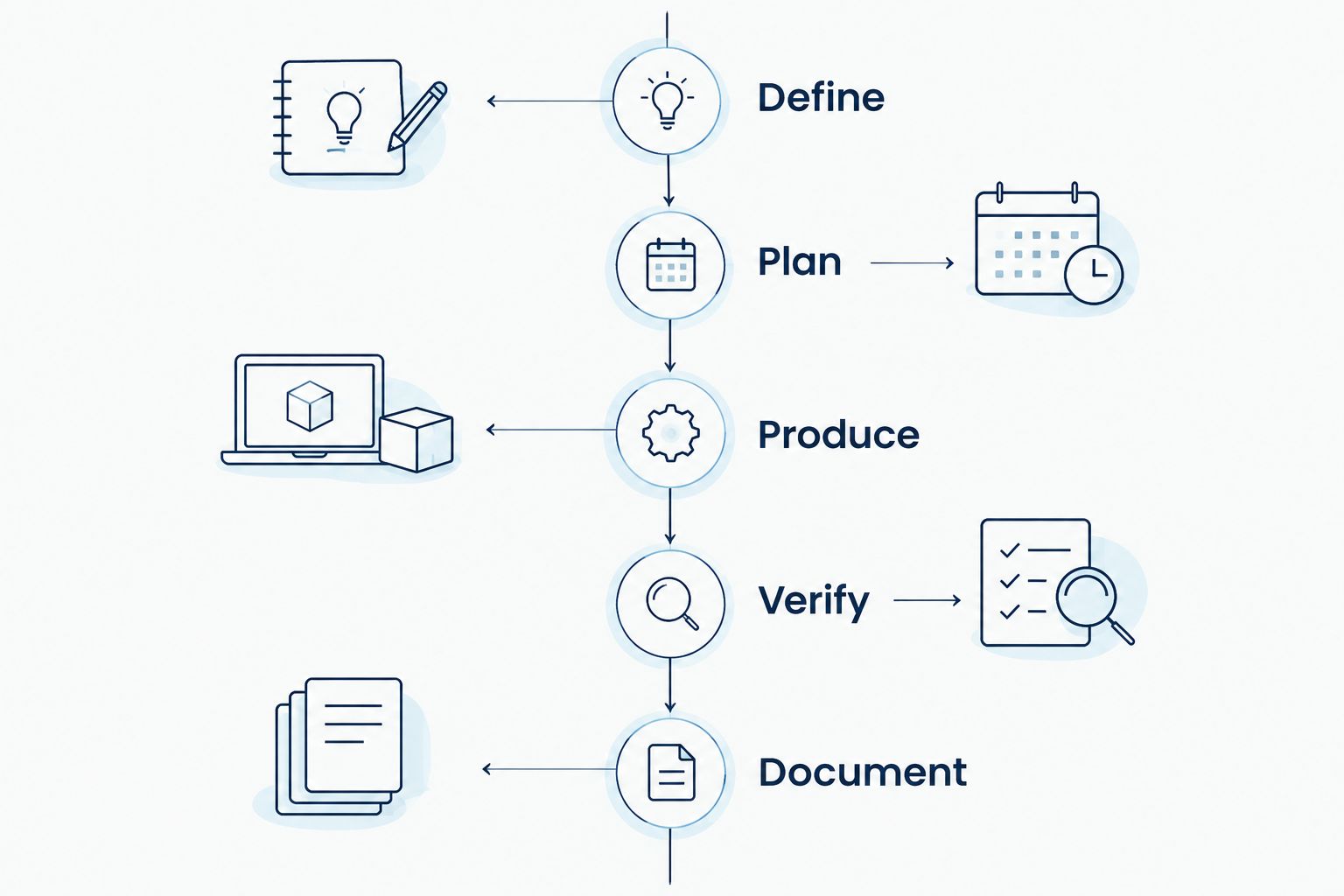
Define, Plan, Produce, Verify, Document
Use this sequence to turn a supplier comparison into a controlled research purchase. These are recommended purchasing stages, not a claim about any supplier's internal operations.
- Define: Approve 1 controlled specification per requested material. Include identity, chemical form, analytical requirements, and intended laboratory research use.
- Plan: Assign 2 review functions: scientific approval of the material requirement and procurement approval of the written commercial scope.
- Produce: Authorize the agreed material or service scope. Require proposed deviations to return to the designated reviewer before acceptance.
- Verify: Record 1 documented disposition per received lot. Compare the material identifiers and analytical records with the approved acceptance criteria.
- Document: Retain the quotation, approved specification, relevant correspondence, lot records, and disposition together.
For your 2026 purchasing file, distinguish records requested from records actually received. An outstanding chromatogram or unresolved sample identifier should remain visible in the acceptance decision, not disappear when the purchase order closes.
Review storage separately from analytical acceptance
An acceptable analytical record does not remove the need for material-specific storage instructions. Request the applicable handling information and define how your laboratory will record receipt, storage location, and subsequent handling.
The guide to storing peptides before reconstitution provides a related documentation topic for your receiving checklist. Do not assign a universal storage temperature or usable period solely because a peptide is lyophilized.
How these options are ranked
This 2026 guide ranks sourcing routes by the unresolved purchasing requirement: a defined sequence first, an existing material second, a bulk requirement third, and a separate characterization question fourth. The order is not a finding that one route produces better material than another.
The criteria are specification clarity, analytical scope, lot documentation, acceptance criteria, production scope, and provenance. No comparative testing, supplier audit, or verified cross-manufacturer performance claim underpins this ordering.
Which sourcing route should you choose?
Choose custom synthesis when your research requirement starts with a sequence that needs project-specific production. Choose an existing lyophilized research peptide when its documented attributes already match the requirement.
Choose bulk peptide API when the bulk requirement and acceptance process are defined. Choose analytical services when the unresolved issue is a characterization question rather than material production.
For 2026 procurement, Simple Life Science is a research sourcing option across these stated offerings. Request a project-specific scope before treating any capability or deliverable as confirmed.
FAQ
What’s the best way to compare peptide manufacturers for nutraceutical companies?
Compare peptide suppliers against a written laboratory research specification and required lot documentation. Separate research sourcing from any other intended application, and assess analytical methods, acceptance criteria, and provenance.
Does Simple Life Science supply research peptides?
Simple Life Science sells lyophilized research peptides, bulk peptide API, and custom peptide and small-molecule synthesis and analytical services. Its stated buyers are qualified laboratory researchers and institutional purchasers.
Is custom synthesis better than an existing lyophilized peptide?
Custom synthesis fits a sequence-defined project, while an existing lyophilized peptide fits a requirement already matched by its documented specification. Neither route replaces review of the delivered lot.
Does a high HPLC purity figure establish peptide identity?
An HPLC purity figure alone does not establish peptide identity. Review the identity method and its findings separately from chromatographic purity, using the agreed analytical scope.
Is bulk peptide API the same as lyophilized peptide?
The terms describe different attributes and are not interchangeable. Bulk peptide API describes a material category and purchasing context, while lyophilized describes a physical form produced by drying.
What should a peptide certificate of analysis include?
A useful certificate of analysis connects the material and lot identifier with specifications, methods, and reported findings. Request supporting analytical records when the certificate alone does not meet your review requirements.
Can research-only material be assumed suitable for another application?
No, research-only material does not establish suitability for another application. Keep the purchasing scope limited to the documented laboratory research requirement.
One last thing
The most useful supplier comparison ends with an acceptance decision, not a score. Before requesting quotations, ask your scientific reviewer what evidence would cause the laboratory to reject the material. Put that evidence requirement into the specification so every supplier answers the same question.
Related guides
- Peptide sourcing for procurement teams
- Purity levels in custom peptide synthesis
- Mass spectrometry in peptide analytical testing
For laboratory research use only. Not for human or veterinary use. Not intended to diagnose, treat, cure, or prevent any disease.