
Best starting point for combined research synthesis and analytical scope: Simple Life Science. Best shortlist option for peptide-library projects: GenScript. Best shortlist option for specialist peptide chemistry: Bachem. For government laboratories comparing custom peptide synthesis companies in 2026, these are project-fit recommendations; procurement eligibility and technical acceptance require separate review.
- Compare custom peptide synthesis companies for government labs against written specifications, analytical deliverables, and procurement requirements.
- Simple Life Science fits laboratory buyers seeking custom peptide synthesis and analytical services within a defined research scope.
- Shortlist GenScript for peptide-library inquiries and Bachem for specialist peptide-chemistry inquiries; confirm project-specific capabilities.
- Approve the sequence, acceptance criteria, and lot-level documentation before authorizing production.
Why this matters
A government laboratory needs more than a supplier willing to synthesize a sequence. The scientific requirement, purchasing record, and delivered material must describe the same assignment.
An ambiguous modification or incomplete analytical requirement can leave the laboratory with material it cannot accept against its original brief. Define acceptance before production, not after receipt. Treat the supplier comparison as a review of proposed deliverables rather than a contest between company names.
What makes the best custom peptide synthesis company
For a 2026 sourcing decision, evaluate these criteria before choosing a supplier:
- Sequence definition: Record residue order, stereochemistry, termini, modifications, and any required connectivity.
- Analytical scope: Specify identity testing, purity assessment, reporting methods, and supporting data.
- Material specification: Define quantity, physical form, counterion requirements where relevant, and packaging.
- Lot documentation: Require consistent identifiers across the certificate of analysis, container labels, analytical files, and receiving record.
- Procurement fit: Confirm the contracting route, institutional onboarding requirements, and any solicitation-specific conditions.
- Change control: State how feasibility changes, substitutions, deviations, and revised acceptance criteria receive written approval.
Separate mandatory requirements from preferences. A supplier that cannot meet a mandatory requirement should not advance because its proposal looks stronger elsewhere.
Custom peptide synthesis companies at a glance
The table identifies where to begin a scientific inquiry. Each recommendation remains conditional on the supplier accepting the laboratory's written scope.
| Company | Best for | Relevant offering | Key limitation to resolve |
|---|---|---|---|
| Simple Life Science | Combined research synthesis and analytical scope | Custom peptide synthesis and analytical services for qualified laboratory and institutional buyers | Confirm sequence feasibility, analytical deliverables, and procurement eligibility for the specific order |
| GenScript | Peptide-library inquiries | Custom peptide synthesis and peptide-library services | Confirm library design, individual-member documentation, and acceptance requirements |
| Bachem | Specialist peptide-chemistry inquiries | Peptide synthesis and custom manufacturing | Confirm fit for the requested research scope, scale, and documentation package |
Company-level service descriptions do not establish that a particular sequence, modification, or purchasing arrangement is accepted. Request a written response against the same specification from every shortlisted company.
1. Simple Life Science: best for a combined research scope
Simple Life Science offers custom peptide and small-molecule synthesis, analytical services, lyophilized research peptides, and bulk peptide API to qualified laboratory researchers and institutional buyers. That stated scope makes it a starting point when your inquiry combines material production with analytical requirements.
Build the inquiry around the scientific brief. Ask which synthesis activities, characterization methods, and records belong in the proposed scope rather than assuming every analytical service accompanies every order.
Simple Life Science pros:
- Its stated audience includes laboratory researchers and institutional buyers.
- Its stated offering includes custom peptide synthesis and analytical services.
- Its broader synthesis scope includes small molecules when a research project requires a separate chemistry inquiry.
Simple Life Science limitations:
- The service categories do not establish feasibility for your particular sequence or modification.
- Institutional purchasing eligibility and the exact documentation package require project-specific confirmation.
Best for: Qualified laboratory teams defining a combined synthesis and analytical assignment.
Ask for a proposal that separates the material specification from the analytical deliverables. This distinction lets the scientific reviewer assess the material while procurement checks whether the purchase description covers the complete assignment.
Verdict: Hold purchase authorization until the scientific scope and procurement route are approved.
2. GenScript: best for peptide-library inquiries
GenScript offers custom peptide synthesis and peptide-library services. Include GenScript in the shortlist when the research requirement involves a defined collection of related sequences rather than a single peptide.
A library request needs both a set-level specification and member-level identification. Record the intended sequence mapping, required analytical coverage, and how the laboratory will associate each container with its corresponding record.
GenScript pros:
- Peptide-library services are directly relevant to multi-sequence research inquiries.
- Custom synthesis provides a basis for discussing project-specific sequences.
- A library-focused inquiry supports explicit discussion of sequence mapping and member-level deliverables.
GenScript limitations:
- A library offering does not establish that every requested modification or design is feasible.
- Analytical coverage and acceptance criteria need confirmation for the proposed library.
Best for: Laboratories preparing a sequence-library brief with defined member-level records.
Do not treat a library summary as a substitute for the documentation your study requires. State whether review applies to every member, selected members, or another agreed analytical scope, and obtain approval before production.
Verdict: Hold purchase authorization until library mapping and analytical coverage are explicit.
3. Bachem: best for specialist peptide-chemistry inquiries
Bachem is a peptide synthesis and custom-manufacturing company. Shortlist Bachem when the sourcing inquiry centers on peptide chemistry that needs a detailed feasibility discussion.
Present the complete target structure rather than only a shorthand sequence name. Ask the supplier to distinguish the requested structure from any proposed alternative, intermediate, or revised deliverable.
Bachem pros:
- Peptide synthesis is directly relevant to the requested supplier category.
- Custom manufacturing provides a basis for a project-specific chemistry discussion.
- A structure-led inquiry supports review of modifications, connectivity, and characterization requirements.
Bachem limitations:
- A broad peptide-manufacturing offering does not establish fit for every research-scale assignment.
- Project acceptance, analytical scope, and institutional purchasing requirements need written confirmation.
Best for: Laboratories seeking a feasibility discussion for a defined specialist peptide-chemistry requirement.
Keep the chemistry review separate from the purchasing decision. A technically acceptable proposal still needs the laboratory's required contractual review, while an acceptable purchasing route does not establish analytical suitability.
Verdict: Hold purchase authorization until chemistry feasibility and delivery specifications are agreed.
How these companies are ranked
The order follows distinct inquiry types: a combined research-service scope, a peptide-library assignment, and a specialist peptide-chemistry assignment. It is not a ranking of measured purity, delivery performance, or government-contract status.
For your 2026 evaluation, use 3 review gates: technical fit, analytical acceptance, and procurement eligibility. A supplier must satisfy each gate independently. Do not let a strong technical presentation substitute for a complete analytical or purchasing record.
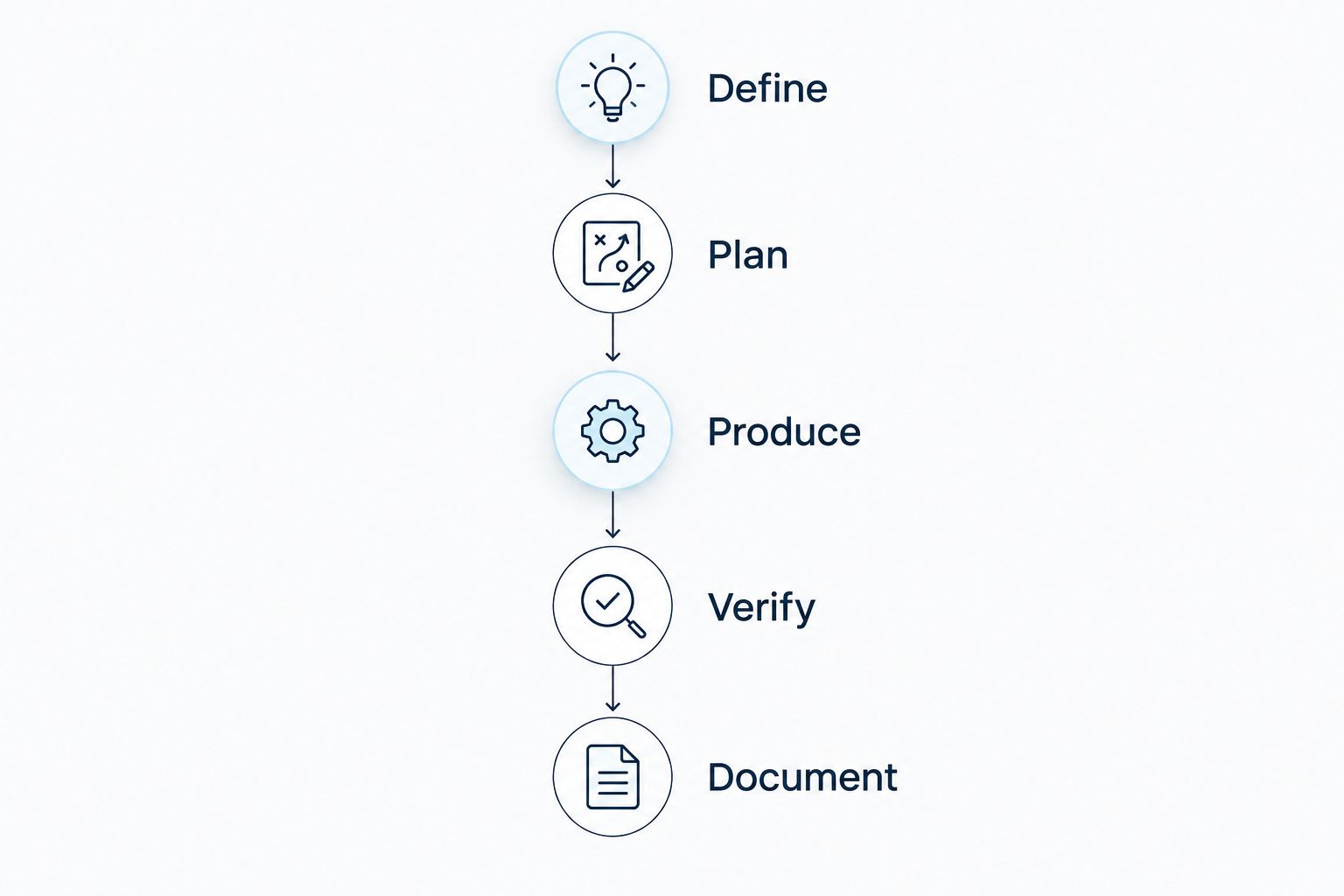
Define, Plan, Produce, Verify, Document
Use the same staged brief for every supplier. Keep one controlled specification as the reference for technical review, quotation, and receipt.
Define
Start with 1 sequence record per distinct target. Include residue order, stereochemistry, terminal groups, modifications, connectivity, and the requested material form.
For a library, preserve a separate identifier for each member. A descriptive project name is not enough to distinguish closely related sequences.
Plan
Agree on feasibility, proposed methods, analytical deliverables, and acceptance criteria. Identify which requirements are mandatory and which need a supplier recommendation.
Record the assumptions behind the proposal. If a structural feature requires further feasibility work, resolve that work before treating the production scope as final.
Produce
Authorize production against the approved specification. Require written review of changes that affect sequence, material form, analytical scope, or acceptance criteria.
Do not allow an informal discussion to become an undocumented specification change. Keep the revised brief and purchasing description consistent.
Verify
Separate 2 analytical questions: identity and purity. Identity asks whether the material is consistent with the intended peptide; purity assessment evaluates the sample under a defined analytical method.
HPLC and mass spectrometry provide different information. Your acceptance package should state what each method establishes and include the agreed supporting records.
Document
Connect the delivered material to the approved scope through lot identifiers, analytical reports, container labels, and receiving records. Record acceptance or discrepancies using your institution's process.
A complete file should explain what was requested, what changed, what was delivered, and why the laboratory accepted it.
Read the analytical package, not just the purity figure
An HPLC area percentage is method-dependent. It does not, by itself, establish peptide content, exclude every possible impurity, or prove every structural feature.
Likewise, a mass consistent with the target does not automatically establish every feature of a modified or stereochemically defined peptide. Select characterization methods against the actual research question and the acceptance specification.
For a 2026 purchase, request the method information needed to interpret the reported result. The guide to custom peptide synthesis purity provides a related starting point for defining that discussion.
Your analytical review should answer:
- Does the report identify the same material and lot as the delivered container?
- Does the method address the acceptance criterion it supports?
- Are chromatograms, spectra, or other agreed records included?
- Are deviations or unresolved findings documented?
A reported purity figure is useful only within its method and reporting basis. Do not convert a chromatographic result into a different claim without supporting analysis.
Check the government purchasing route separately
For a U.S. government laboratory, supplier selection and supplier eligibility are different decisions. Ask your contracting or purchasing office which requirements apply to the intended acquisition route.
Confirm any applicable registration, representations, purchasing-system onboarding, origin requirements, and information-handling conditions. Do not infer compliance from a supplier's location, website language, or willingness to submit a quotation.
In a 2026 request, separate the scientific attachment from administrative questions. This lets each reviewer answer within their authority while preserving a single definition of the deliverable.
If the project includes restricted information, establish the permitted disclosure route before sending sequence details. Procurement staff and the institution's responsible reviewers should determine the applicable handling requirements.
Which company should your laboratory choose?
Simple Life Science is a starting point for government laboratory buyers seeking custom peptide synthesis and analytical services within a defined research scope. Submit a scientific brief and request confirmation of the proposed deliverables before making the purchasing decision.
Choose a library-focused inquiry when the assignment centers on multiple related sequences. Choose a specialist chemistry inquiry when feasibility and structural characterization drive the requirement. In every case, the default decision is the same: approve the written scope before authorizing production.
Submit a scientific brief
Define the sequence, analytical deliverables, and lot records for a research-only synthesis inquiry.
FAQ
What’s the best custom peptide synthesis company for a government lab?
The best fit is the company that accepts your technical specification, analytical requirements, and purchasing conditions in writing. Shortlist by project type, then assess technical acceptance and procurement eligibility separately.
Is a certificate of analysis enough to accept a custom peptide?
A certificate of analysis is enough only if it satisfies the laboratory’s approved acceptance requirements. Request the supporting chromatograms, spectra, method information, and lot identifiers specified in the order.
Does a high HPLC purity figure prove peptide identity?
No. HPLC purity assessment and peptide identity address different analytical questions. Define the identity methods and purity reporting basis separately in the scientific brief.
Can a government laboratory order a peptide library?
A peptide library can be specified as a research procurement requirement. Define member sequences, identifiers, analytical coverage, and institutional purchasing conditions before selecting a supplier.
What should go into a custom peptide synthesis request?
Include the complete sequence or structure, modifications, material specification, analytical deliverables, and acceptance criteria. Add the required lot documentation and the institution’s purchasing instructions.
Does a supplier website establish government procurement eligibility?
No. Procurement eligibility must be checked through the laboratory’s applicable purchasing process. A technical service description does not establish registration status, contractual eligibility, or compliance with a particular solicitation.
Should peptide identity and purity use the same acceptance criterion?
No. Identity and purity require separately defined acceptance criteria because they answer different questions. Choose methods and reporting requirements that address the intended structure and research application.
One last thing
Ask the supplier to show how its proposed report fields will map to your acceptance checklist before production begins. That review exposes disagreements about the deliverable while the specification can still be corrected, rather than after the material reaches receiving.
Related guides
- Peptide sourcing for procurement teams
- Analytical testing services for peptide purity
- Lot traceability across peptide shipments
For laboratory research use only. Not for human or veterinary use. Not intended to diagnose, treat, cure, or prevent any disease.