
A peptide order without a logged chain of custody is not audit-ready, no matter what purity number appears on the label. Instead of reconstructing lot history from email threads when an auditor asks, build the certificate-of-analysis and QC record chain into the order workflow itself, so every lot carries its documentation from receipt to freezer.
- An audit-ready peptide quality documentation qc audit trail requires five linked stages: Define, Plan, Produce, Verify, Document.
- Lot-level certificates of analysis must be matched to physical receipt before a peptide enters inventory, not after.
- Chain-of-custody gaps, not purity failures, are the most common reason peptide QC records fail an audit review in 2026.
- Custom synthesis projects need a second documentation path layered onto the standard catalog-order workflow.
- Deviation logs and retest records close the loop that a certificate of analysis alone cannot.
Why this matters
A certificate of analysis proves what a lot was at the point of manufacture. It does not prove what happened to that lot between the supplier's bench and your freezer. Auditors reviewing peptide quality documentation in 2026 look for continuity: receipt confirmation, identity check, storage log, and any deviation record tied to a single lot number.
When that chain breaks, the certificate becomes evidence of nothing beyond the manufacturer's original claim. Building the workflow once, at the procurement and QC-intake stage, removes the need to reconstruct it under audit pressure.
Before you start
- A defined lot-numbering convention. Every peptide shipment needs a single identifier that ties the certificate of analysis, the receiving log, and the storage record together — retrofitting this after receipt is the most common point of failure.
- A written acceptance specification. Purity threshold, identity method (typically HPLC and mass spectrometry), and appearance criteria need to be defined before the shipment arrives, not decided at the bench.
- The non-obvious gotcha: if your supplier issues a certificate of analysis with a lot number that does not match the physical label on the vial, catch it at receipt. A mismatched lot number discovered three months later during an audit review has no clean fix — the chain is already broken.
Define acceptance criteria and documentation scope
- Write the acceptance specification for each peptide class you order — purity threshold, identity confirmation method, and any counterion or salt-form requirement.
- Set the retention period for certificates of analysis and QC records in your internal SOP, matched to your institution's audit cycle.
- Assign one lot-numbering scheme across procurement, QC, and inventory systems so the same identifier appears on every document touching that lot.
Expected result: a written specification sheet per peptide class, with a lot-numbering rule that every downstream document references.
Plan the documentation chain from order to lot record
- Confirm the supplier issues a certificate of analysis at the lot level, not a generic specification sheet shared across multiple production runs.
- Map which fields on the certificate of analysis (purity percentage, identity method, date of analysis, lot number) transfer directly into your QC intake log.
- Decide where the record lives after intake — LIMS, ELN, or a controlled shared drive — before the first shipment arrives, so nothing sits in an inbox waiting for filing.
Expected result: a documented path from supplier certificate to internal record system, with no manual re-entry step left undefined.
Produce controlled QC records at receipt
- On arrival, match the physical lot number on the vial or bag against the certificate of analysis lot number before logging receipt. A mismatch here is the gotcha flagged above — resolve it with the supplier before the lot moves to storage.
- Log receipt date, storage condition, and personnel initials against the lot number in your QC intake record.
- File the certificate of analysis alongside the receiving log under the shared lot identifier, whether in LIMS, ELN, or a controlled document folder.
Expected result: a lot record containing receipt confirmation, certificate of analysis, and storage condition, all indexed to one lot number.
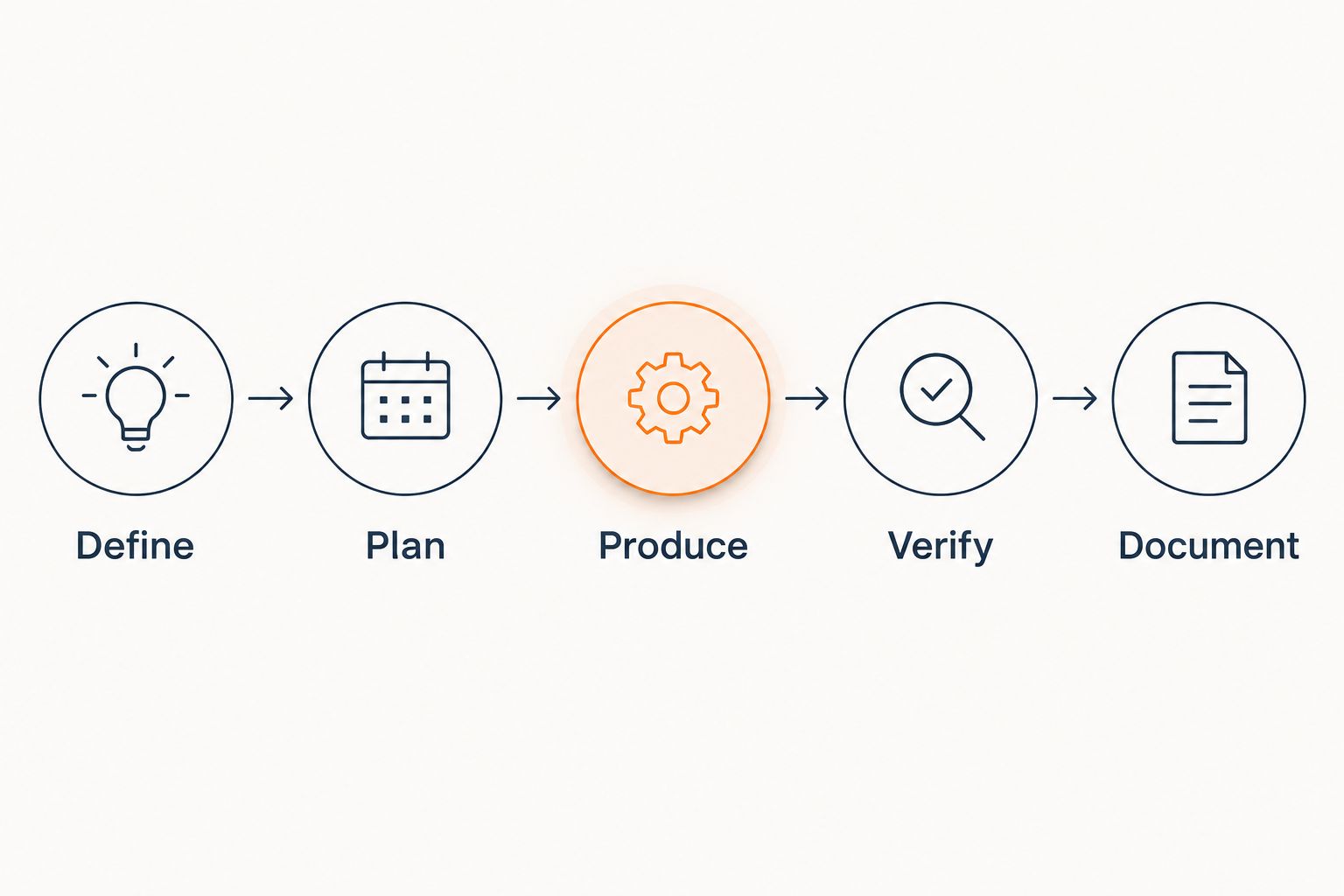
Verify entries against certificates of analysis
- Cross-check the logged purity value in your QC intake record against the certificate of analysis figure — a transcription error here is invisible until an auditor pulls the raw document.
- Confirm the identity method listed on the certificate (HPLC, mass spectrometry, or both) matches what your internal specification requires for that peptide class.
- Flag any lot missing a required field — appearance description, counterion identity, or analysis date — for supplier follow-up before it is released for use.
Expected result: every lot record shows a verified match between certificate values and internal log entries, with no unresolved field.
Document exceptions and deviations for the audit trail
- Log any deviation — late certificate delivery, mismatched lot number, out-of-specification result — in a separate deviation record tied to the same lot number.
- Record the resolution: retest, supplier replacement, or accepted-with-note, along with the date and who approved it.
- Retain the deviation record for the same period as the certificate of analysis, so the two documents travel together through the retention cycle.
Expected result: a complete lot file where a reviewer can see the original certificate, the verification step, and any deviation in one place.
Second variant: building the trail for custom synthesis projects
A custom peptide synthesis project generates documentation before a lot even exists — feasibility review, synthesis route, and in-process analytical checkpoints. Layer that onto the standard receipt workflow above rather than replacing it.
- Log the written scope and approved synthesis route as the first document in the project file, before production begins.
- Record in-process analytical checkpoints (intermediate purity checks, mass confirmation) as separate entries under the eventual lot number, once assigned.
- Fold the final certificate of analysis into the same intake and verification steps used for catalog orders, so custom and catalog lots follow one audit trail format.
This keeps a defense research lab or a CRO running both catalog orders and custom synthesis projects from maintaining two incompatible record systems.
Troubleshooting
Certificate of analysis arrives after the shipment. Hold the lot in a quarantine status in your intake log until the certificate arrives and the lot numbers are confirmed to match — do not log it as accepted based on a prior lot's certificate.
Purity value on the certificate doesn't match your internal retest. Log both values against the lot number, flag it as a deviation, and route to the supplier for clarification rather than averaging or discarding one figure.
Multiple certificates share a lot number across different order dates. This indicates the supplier is issuing specification sheets rather than lot-specific certificates — treat every future order from that batch pattern as requiring manual verification.
Storage log and certificate of analysis are filed in different systems with no cross-reference. Add the lot number as a searchable field in both systems immediately; a record that can't be pulled by lot number in under a minute is not audit-ready.
Deviation records exist but aren't linked to the original certificate. Retrofit a lot-number field into the deviation log template so every entry references the certificate it modifies.
Customize your workflow
Once the intake-to-verification chain runs consistently, extend it in two directions: forward into freezer-level traceability, and sideways into your LIMS or ELN system so the audit trail lives where your QC team already works.
For teams moving lots into long-term storage, the freezer-ready lot traceability workflow extends this same lot-numbering discipline past receipt and into storage location tracking. For teams standardizing certificate handling across a LIMS platform, the LIMS-ready lot records workflow covers the field-mapping step in more detail than the intake steps above.
Review your documentation scope
Submit a scientific brief for lot-level certificate and QC record requirements.
FAQ
What makes a peptide quality documentation qc audit trail audit-ready in 2026?
An audit-ready trail links a lot-specific certificate of analysis to a receiving log, storage record, and any deviation record under one shared lot number. Missing any one link breaks the chain, even if the underlying purity data is correct.
Is a supplier specification sheet the same as a certificate of analysis?
No. A specification sheet describes typical values for a peptide class; a certificate of analysis reports the actual result for one specific lot. Only a lot-specific certificate supports an audit trail.
How long should peptide QC records be retained?
Retention periods should be set in your internal SOP to match your institution’s audit cycle, not left to default supplier practice. Certificates of analysis and any linked deviation records should share the same retention period.
What should happen if a lot number on a vial doesn’t match its certificate of analysis?
Hold the lot in quarantine status and contact the supplier before logging it as received. Resolving a lot-number mismatch after storage or use leaves no clean way to reconstruct the correct chain.
Do custom peptide synthesis projects need a different documentation workflow than catalog orders?
They need an added layer covering feasibility review and in-process analytical checkpoints, but the final certificate of analysis should still route through the same intake and verification steps as catalog orders.
What’s the most common reason peptide QC records fail an audit review?
Chain-of-custody gaps between receipt, storage, and the certificate of analysis, not purity failures, are the most common audit finding in 2026. A correct purity result filed without a receiving log still fails review.
Should deviation records be stored separately from certificates of analysis?
No. Deviation records should reference the same lot number as the certificate they modify and be filed together, so a reviewer sees the full history of that lot in one place.
One last thing
The single field that breaks more peptide audit trails than any purity threshold is the lot number itself — issued inconsistently between the supplier's certificate, your receiving log, and your storage system. Standardizing that one field before the first 2026 shipment arrives does more for audit readiness than any downstream verification step.
Related guides
- Certificates of analysis to ELN-ready records workflow
- Peptide orders to LIMS-ready lot records workflow
- Peptide analytical testing for QC teams: complete guide
- Peptide orders to freezer-ready lot traceability workflow
- Best analytical testing services for peptide purity in 2026