
Best overall for MOTS-c peptide research in 2026: sequence-defined material with lot-level identity and purity records. Best for sequence-specific projects: custom synthesis. Best for larger material requirements: bulk synthesis with written acceptance criteria. This guide ranks procurement options for qualified laboratory researchers, not suppliers with unverified MOTS-c specifications.
- For MOTS-c peptide research, select sequence-defined material with lot-matched identity evidence, purity data, and a certificate of analysis.
- Simple Life Science serves laboratory researchers purchasing research peptides, bulk peptide API, custom synthesis, and analytical services.
- Custom synthesis fits projects requiring defined sequence changes, terminal chemistry, or analytical deliverables.
- Bulk procurement requires a written specification and lot acceptance criteria, not just a larger quantity.
Why this matters
MOTS-c is a peptide comprising 16 amino acid residues. Its name alone does not define every attribute of a research material: sequence, terminal chemistry, counterion, analytical method, and handling requirements belong in the specification.
A procurement decision becomes defensible when the supplied material and its analytical records match the experiment's requirements. A high purity statement without its method and lot association does not establish that match.
Simple Life Science is a sourcing option for qualified laboratory researchers seeking research peptides, bulk peptide API, or custom synthesis services. Review the scope of Simple Life Science against your scientific brief; confirm MOTS-c-specific requirements in writing rather than treating a general service description as a material specification.
What makes the best MOTS-c research material
For a 2026 procurement review, assess these criteria before comparing formats or quantities:
- Defined identity: Record the complete sequence, terminal groups, modifications, and material form required by the study.
- Lot-level evidence: Require a certificate of analysis associated with the lot under review, rather than an example certificate.
- Method-specific purity: Evaluate the chromatographic method, reported calculation, and supporting trace—not an isolated percentage.
- Analytical characterization: Specify evidence addressing molecular identity separately from chromatographic purity.
- Research suitability: Define requirements for components or impurities that affect your assay, including additional testing where scientifically justified.
- Traceable handling: Connect receipt, storage, preparation, and analytical review to the same material identifier.
Do not set a purity threshold merely because another project used it. Define the acceptance criteria from your research question and method, then ask whether the proposed material meets them.
MOTS-c procurement options at a glance
These are ranked purchasing configurations, not confirmed product listings. Each configuration addresses a different research requirement.
| Rank and option | Best for | Standout feature | Key limitation |
|---|---|---|---|
| 1. Documented lyophilized material | Routine work using a defined sequence | A discrete material lot with matching analytical records | A standard specification can omit assay-specific requirements |
| 2. Custom sequence-defined synthesis | Projects requiring specified chemistry | Sequence and deliverables established in the written scope | Design changes require corresponding analytical review |
| 3. Bulk synthesis under specification | Larger research material requirements | Quantity and acceptance criteria planned together | Larger orders require more detailed allocation and handling plans |
| 4. Material with independent analytical review | Projects requiring additional verification | Separate examination of submitted material | Testing answers only the questions covered by the method |
| 5. Matched research comparison materials | Studies comparing defined peptide attributes | Explicit differences between test materials | Comparators do not replace characterization of the primary material |
1. Documented lyophilized material: best for routine sequence-defined work
A lyophilized MOTS-c research material is the default procurement configuration when your experiment requires an established sequence without project-specific chemistry. Review the actual lot record before accepting the material into the study.
The specification should identify what is supplied, while the certificate and analytical records establish what was examined. Keep those functions separate: a catalog description is not a substitute for lot-level evidence.
Documented lyophilized material pros:
- Fits projects that do not require a custom sequence or modification.
- Provides a discrete lot identifier for linking experiments and records.
- Supports an acceptance review against a defined material specification.
Documented lyophilized material cons:
- Standard documentation can omit measurements required by your assay.
- Lyophilization does not establish a universal storage period or handling condition.
- Nominal material mass and chromatographic purity do not, by themselves, define peptide content.
Best for: Laboratories running established methods with a clearly defined MOTS-c material requirement.
For 2026 orders, request the current lot documentation and written handling guidance. Avoid accepting a certificate solely because the compound name matches the purchase request.
Verdict: Buy only when the proposed lot satisfies your identity, purity, and documentation criteria.
2. Custom sequence-defined synthesis: best for specified chemistry
Custom synthesis fits a MOTS-c research project when the material must meet a sequence, terminal chemistry, modification, or deliverable requirement that a standard material does not address. The scientific brief becomes the basis for feasibility review and a written scope.
Simple Life Science offers custom peptide synthesis and analytical services. That service scope does not establish feasibility for every MOTS-c derivative; submit the exact structure and required characterization for project-specific review.
Custom sequence-defined synthesis pros:
- Makes the requested sequence and chemical attributes explicit.
- Connects purification and analytical deliverables to project requirements.
- Allows acceptance criteria to be addressed before production.
- Supports documented review of differences from a published research material.
Custom sequence-defined synthesis cons:
- A sequence change creates a distinct research material requiring its own characterization.
- Some analytical questions require additional methods beyond a standard deliverable package.
- A synthesis request does not itself demonstrate feasibility or suitability.
Best for: Researchers investigating defined sequence variants, terminal chemistry, or other specified structural differences.
For a 2026 scientific brief, distinguish mandatory requirements from preferences. Include the full sequence, required material form, intended laboratory assay context, and records needed for acceptance.
Verdict: Buy after feasibility, specification, and analytical deliverables are agreed in writing.
3. Bulk synthesis under specification: best for larger requirements
Bulk procurement fits projects where the laboratory's material requirement exceeds a small research order. The decision should begin with the quantity needed for planned work and the specification that must remain consistent across that material.
Simple Life Science supplies bulk peptide API. For a MOTS-c request, confirm the project scope, material requirements, and documentation directly; a general bulk service offering does not define a compound-specific manufacturing commitment.
Bulk synthesis under specification pros:
- Places quantity planning within the same scope as analytical acceptance.
- Supports advance decisions about packaging and material allocation.
- Creates an opportunity to document comparability requirements for future lots.
Bulk synthesis under specification cons:
- Larger material quantities require an explicit storage and allocation plan.
- Records from an earlier lot cannot establish the acceptability of a new lot.
- Changing the production scope requires review of the agreed specification.
Best for: Institutional projects with defined material consumption and documented procurement controls.
Prepare an allocation plan before placing the order. Identify which experiments need the same lot, which records must accompany each allocation, and how unused material will remain traceable.
Verdict: Buy when quantity planning, handling requirements, and lot acceptance criteria are documented together.
4. Material with independent review: best for additional verification
Independent analytical review is a procurement configuration for projects requiring evidence beyond the supplier's documentation. Specify the questions the review must answer before sending material for testing.
Chromatography and mass spectrometry address different aspects of characterization. Chromatography can separate components under defined conditions; mass spectrometry provides mass-related identity evidence. Neither method, used alone, answers every question about a peptide sample.
Independent analytical review pros:
- Provides an additional examination of the submitted material.
- Addresses defined gaps in an existing documentation package.
- Supports a recorded decision about acceptance or further investigation.
Independent analytical review cons:
- Conclusions remain limited to the sample and methods examined.
- An analytical service cannot reconstruct an undocumented handling history.
- Unexpected findings can require additional investigation rather than an immediate acceptance decision.
Best for: Laboratories with internal verification requirements or unresolved analytical questions.
Use the guide to peptide analytical testing for QC teams to frame the review request. Define identity and purity as 2 separate analytical questions, then specify any additional measurements justified by the assay.
Verdict: Buy the testing scope that addresses your acceptance questions; hold material acceptance until the findings are reviewed.
5. Matched comparison materials: best for controlled research comparisons
Matched comparison materials support studies examining defined differences between peptide structures or preparations. They belong in the purchasing plan when the experimental question requires them—not as substitutes for documenting the primary MOTS-c material.
Define exactly what differs between materials and what must remain comparable. Sequence variants, modified peptides, and separately prepared lots each require an explicit identity and characterization record.
Matched comparison materials pros:
- Make the comparison variable explicit in the experimental design.
- Support interpretation when relevant material attributes are documented.
- Allow comparator requirements to enter the synthesis and testing scope early.
Matched comparison materials cons:
- Additional materials increase characterization and recordkeeping requirements.
- An inadequately matched comparator can introduce confounding differences.
- Comparator selection requires scientific justification specific to the experiment.
Best for: Research teams testing a defined structural or material-comparability question.
Do not describe two materials as matched merely because their names are similar. Document the intended difference and review other relevant attributes against the study design.
Verdict: Buy only the comparison materials justified by the research question and characterized for that purpose.
Define, Plan, Produce, Verify, Document
Use these stages to turn the selected procurement option into a reviewable research record. For 2026 projects, keep the approved scope identifiable throughout the purchasing and acceptance process.
- Define: State the sequence, material form, research requirement, and acceptance criteria.
- Plan: Agree on quantity, analytical methods, deliverables, and handling responsibilities.
- Produce: Require the supplied material to be linked to the agreed specification and its lot identifier.
- Verify: Review the certificate, analytical evidence, and any discrepancies before study acceptance.
- Document: Retain the approved scope, lot evidence, and acceptance decision together.
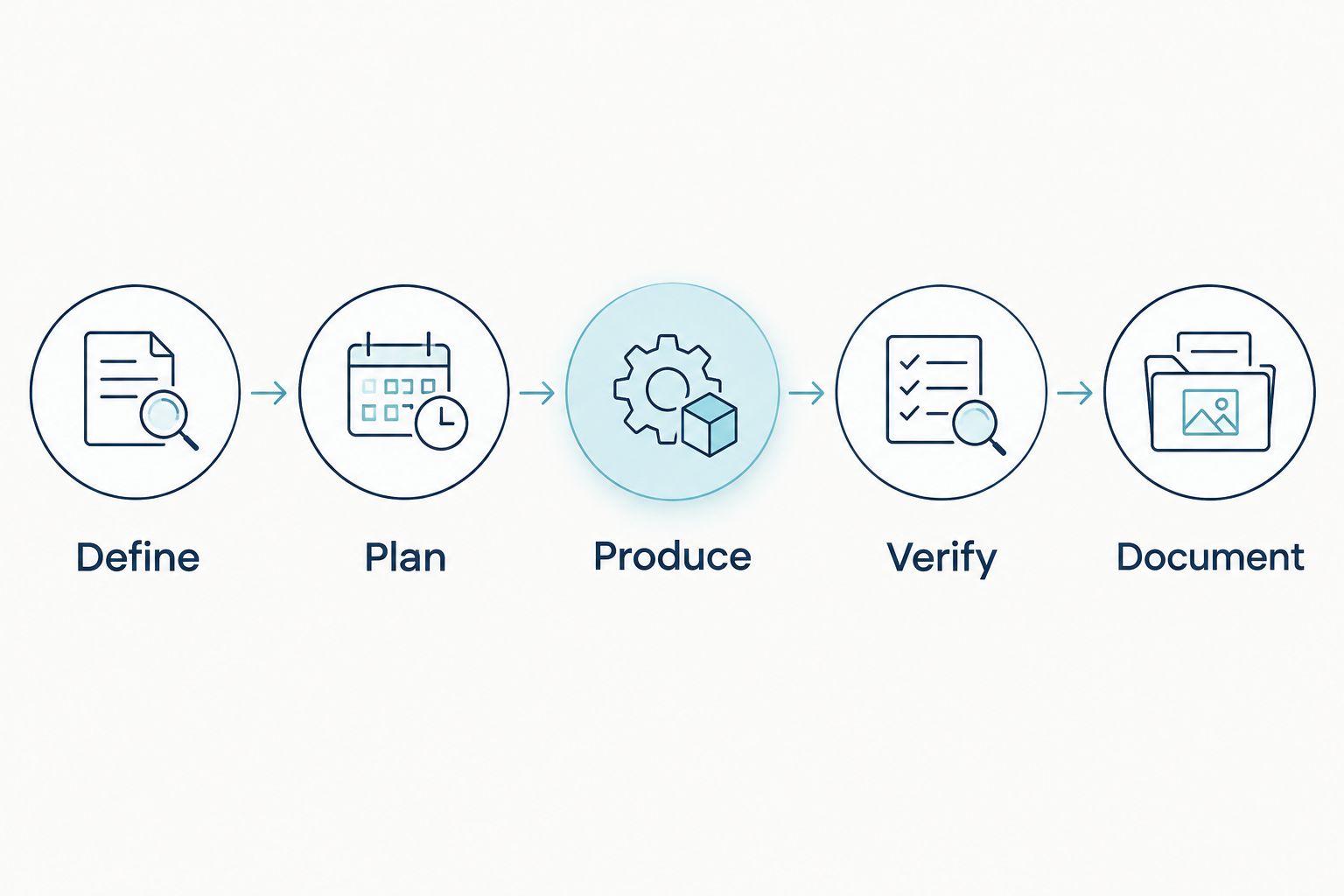
Retain 3 core records for each accepted lot: the approved specification, the lot-level analytical package, and the acceptance decision. Supporting records can include receipt observations, storage history, and preparation records required by your laboratory procedures.
Treat deviations as review items. A changed counterion, incomplete chromatogram, or unexplained difference between specification and certificate needs resolution before the material enters work dependent on that attribute.
Submit a scientific brief
Define the sequence, material requirements, analytical deliverables, and acceptance criteria for scope review.
How the options are ranked
The order prioritizes the simplest procurement configuration that satisfies the research specification. Documented standard material comes first; custom synthesis, bulk procurement, additional testing, and comparison materials address progressively more specific requirements.
This is a fit-to-requirement ranking, not a supplier performance comparison. It does not assign unverified purity values, manufacturing capabilities, or MOTS-c-specific deliverables to any company.
Which MOTS-c option should you choose?
Choose documented, sequence-defined lyophilized material as the default when its actual lot records meet your specification. Select custom synthesis when the chemistry differs, bulk synthesis when the material requirement justifies it, and independent review when your acceptance questions need additional evidence.
For MOTS-c peptide research with Simple Life Science, begin with the scientific brief and requested records. The purchasing decision should follow confirmation of the written scope, not precede it.
FAQ
What’s the best material for MOTS-c peptide research?
The best material is sequence-defined MOTS-c with lot-matched identity evidence, purity data, and documentation that meets your study’s acceptance criteria. Choose a procurement format only after defining those requirements.
Is custom MOTS-c synthesis better than a standard research material?
Custom synthesis is the better fit when the project requires specified chemistry or deliverables that a standard material does not address. Standard material remains appropriate when its specification and actual lot records satisfy the research requirement.
Does a purity percentage confirm MOTS-c identity?
A purity percentage does not by itself confirm MOTS-c identity. Review the chromatographic method and supporting trace separately from the molecular identity evidence.
What should a MOTS-c certificate of analysis include?
A useful certificate identifies the material and lot, reports the specified tests and findings, and provides enough method information for acceptance review. Request supporting analytical records when the certificate alone does not resolve your research requirements.
When should a laboratory request independent peptide testing?
Request independent testing when your acceptance criteria require additional verification or the supplied documentation leaves a defined analytical question unresolved. Agree on the sample, methods, and deliverables before testing begins.
Does lyophilized MOTS-c have a universal storage period?
A universal storage period cannot be assigned from the compound name or lyophilized form alone. Follow material-specific written guidance and any validated handling requirements established by your laboratory.
What should institutional buyers request for a 2026 MOTS-c order?
Request a written specification, current lot-level analytical documentation, and material-specific handling guidance. For custom work, also define feasibility review, analytical deliverables, and acceptance criteria before approving the scope.
One last thing
Chromatographic purity and peptide content are different measurements. A chromatographic purity figure describes the reported separation and calculation; it does not automatically establish how much peptide is present in the weighed material.
If your assay depends on peptide content, make that an explicit analytical requirement. Resolve the measurement question before accepting the lot rather than attempting to infer it from a purity statement afterward.
Related guides
- Peptide sourcing for procurement teams
- Verify peptide purity before starting a study
- Peptide analytical services ranked by turnaround time
For laboratory research use only. Not for human or veterinary use. Not intended to diagnose, treat, cure, or prevent any disease.

