
Peptide lot traceability is maintained by linking the supplier’s lot identifier to the container label, lot-specific analytical documentation, shipment record, receiving record, and laboratory inventory record. Each transfer, subdivision, or disposition must preserve that link so you can reconstruct the material’s provenance. A tracking number alone is insufficient: it identifies a shipment, not the peptide lot inside it.
- Peptide lot traceability requires linked container labels, lot documentation, shipment records, and laboratory inventory entries.
- Simple Life Science serves qualified laboratory researchers and institutional buyers sourcing research peptides and custom synthesis.
- A certificate of analysis supports analytical review; it does not replace shipment or custody records.
- Preserve the supplier lot identifier when assigning local inventory identifiers or recording laboratory aliquots.
Why this matters
A laboratory needs to distinguish material identity from delivery status. A package can reach the correct institution while its contents remain unsuitable for acceptance because labels, documentation, or the receiving record do not reconcile.
Traceability answers which material moved, where it went, and which records support its identity. Analytical characterization answers a different question: whether the examined material meets the defined specification. Your acceptance process needs both.
Simple Life Science supplies research peptides, bulk peptide API, and custom synthesis and analytical services to qualified buyers. Simple Life Science is for laboratory researchers and institutional buyers sourcing research peptides and custom synthesis services. Define the required documentation in the purchasing scope rather than assuming that any supplier provides every record described below.
How is lot traceability maintained across peptide shipments?
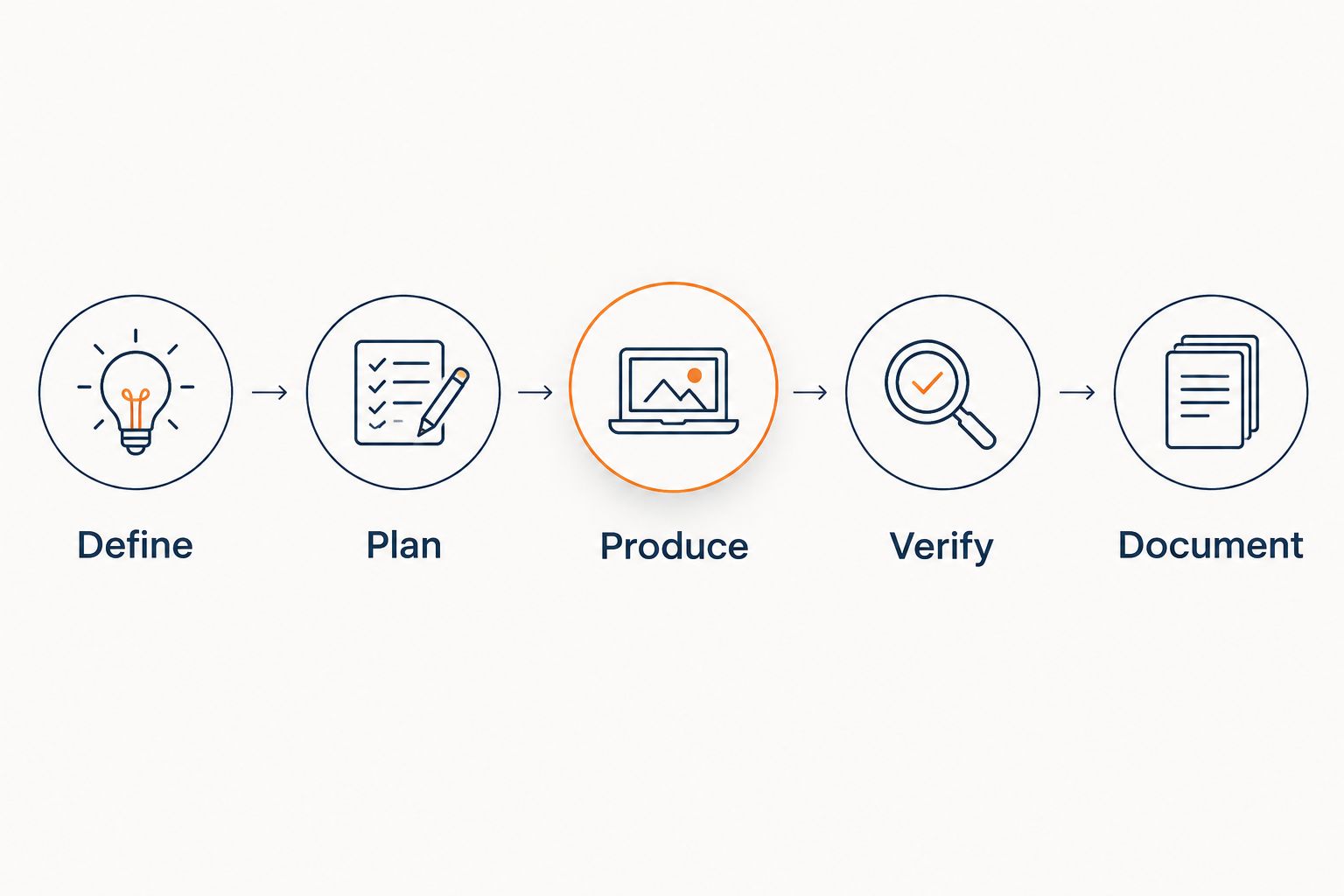
Maintain a continuous record chain from the supplier’s identified lot through dispatch, receipt, storage, and subsequent laboratory handling. Use the following stages as a purchasing and receiving framework; confirm the supplier’s actual deliverables in writing.
Define
Specify the peptide identity and the documentation you require before ordering. For custom synthesis, the written scope should distinguish the requested sequence, modifications, material form, analytical methods, and acceptance criteria where relevant.
Define how the lot identifier will appear on containers and accompanying records. If an institutional inventory identifier differs from the supplier’s identifier, require an explicit mapping rather than substituting one for the other.
For a 2026 procurement review, ask for a sample documentation package before approving the order. Review its structure, not another lot’s analytical findings as evidence for the material you will receive.
Record these requirements in the purchasing scope:
- Material identity and agreed specification.
- Supplier lot identifier and container identification requirements.
- Requested analytical documents and their lot references.
- Shipment-to-lot mapping for split deliveries.
- Receiving acceptance criteria and discrepancy handling.
Plan
Determine how the shipment will be reconciled at receipt. The purchase order, packing record, and receiving entry should provide a documented route back to the same material and lot, even when their internal identifiers differ.
A single order does not necessarily represent a single lot. Likewise, material from one lot can be distributed across separate shipments. Your record structure must distinguish the order, the lot, and the shipment rather than treating them as interchangeable.
Identify who reviews documentation, who inspects containers, and who authorizes inventory acceptance. These responsibilities belong in your laboratory’s receiving procedure, not in an informal email thread that becomes difficult to retrieve.
Produce
Request lot identification at the material-production or finished-material stage applicable to the written scope. Ask the supplier to explain which stage its lot identifier represents and how subsequent packaging relates to it.
For custom synthesis, distinguish synthesis records from purification, analytical characterization, and packaging records. Do not assume that a production batch, purified fraction, and packaged lot share the same identifier or represent identical boundaries.
Preserve provenance across identifier changes. Where a supplier assigns a new identifier after processing or packaging, request the relationship needed to trace the supplied material to its documented source. The required level of detail depends on the project scope.
Verify
At receipt, compare the container label with the packing record and lot-specific analytical documentation. Confirm the material identity, lot identifier, container count, and received quantity using the units stated in the purchasing documents.
Record visible damage, unreadable labels, missing documents, and discrepancies. Where shipping conditions form part of the acceptance criteria, review the available evidence against those criteria rather than assuming that packaging appearance proves acceptable transit conditions.
A 2026 receiving checklist should separate identity reconciliation from analytical acceptance. Matching identifiers do not establish purity, and an analytical report does not establish an uninterrupted shipment history.
Document
Create a receiving entry that connects the supplier lot to the local inventory record and storage location. Link the purchase order, shipment reference, analytical documentation, receiving inspection, and acceptance decision.
Record later transfers, laboratory aliquots, returns, and disposal against that same lineage. If you assign a new local identifier, retain its parent-lot relationship so the original supplier record remains retrievable.
The peptide orders to freezer-ready lot traceability workflow is a related guide for organizing receiving and storage records. Treat the workflow as a record-design reference; confirm material-specific storage requirements from the applicable documentation.
Which records should remain linked to the peptide lot?
The record chain should let another authorized reviewer reconstruct the shipment without relying on the original buyer’s memory. Keep identifiers searchable and make the relationship between documents explicit.
| Record | Traceability role | What it does not establish alone |
|---|---|---|
| Container label | Identifies the material and stated lot on the physical container | Analytical conformity or complete custody history |
| Certificate of analysis | Associates reported analytical findings with an identified lot | Delivery condition or subsequent laboratory handling |
| Packing record | Maps dispatched material to the shipment | Successful receiving inspection |
| Carrier record | Identifies transport events for the package | Identity of each container inside it |
| Receiving record | Documents what the laboratory received and reviewed | Earlier processing history unless supporting records are linked |
| Inventory record | Connects accepted material to its location and later movements | Supplier provenance if the parent lot is omitted |
A certificate of analysis should identify the material and lot clearly enough to reconcile with the received containers. Review the reported methods and acceptance criteria within their written scope; a document title alone does not establish the extent of testing.
For your 2026 record template, include a place for document identity or revision information when supplied. Preserve the accepted version and record later corrections without silently overwriting the basis of the original receiving decision.
How should you manage split shipments and laboratory aliquots?
Split deliveries require shipment-level records beneath the lot-level record. Laboratory aliquots require child records beneath the source-container or parent-lot record. These are different events, but both depend on preserving lineage.
| Record approach | Best for | Strength | Limitation |
|---|---|---|---|
| Controlled receiving register | Laboratories managing receipt through an approved register | Provides a defined place for reconciliation and acceptance | Supporting documents and subsequent movements need explicit links |
| Laboratory inventory system | Teams tracking container locations and transfers | Connects material records to storage and movement entries | Identifier mapping and user permissions require configuration |
| LIMS-linked lot record | Teams connecting inventory with samples and analytical records | Supports relationships between received material and laboratory work | Traceability still depends on correct entry and controlled workflows |
Choose the record approach your laboratory can maintain consistently. A software entry without the supplier lot relationship is not stronger evidence than a controlled register with complete supporting records.
For split shipments, retain a separate receiving event for each delivery. Map each event to the relevant lot and reconcile it against the outstanding order quantity. Do not reuse an earlier acceptance entry as evidence that a later package was inspected.
For laboratory aliquots, assign identifiers according to your approved procedure and retain the parent-container relationship. Record the subdivision event and destination so a study material can be traced back to its source without guessing from vial names.
When different lots arrive under one purchase order, keep their analytical documentation and acceptance decisions distinct. An order number is a commercial reference, not a substitute for lot identity.
Why peptide lot traceability requirements vary
The required record detail follows the material and the written research scope. Define the controls needed for your project rather than applying an undocumented assumption to every shipment.
- Material form: Individually packaged lyophilized peptides and bulk peptide API require different container and quantity reconciliation.
- Shipment structure: Split deliveries require separate receiving events linked to the appropriate lot.
- Processing history: Further purification, repackaging, or other processing requires an explicit relationship between source and supplied identifiers.
- Analytical scope: Identity, purity, and other specified attributes require review of the relevant methods and documents.
- Laboratory handling: Transfers and aliquots add custody events after receipt and need parent-material references.
- Institutional controls: Your purchasing, inventory, and document procedures determine approval responsibilities and record access.
In a 2026 procedure review, test whether the record chain handles exceptions as well as routine deliveries. A missing label, replacement document, or partial receipt should have a defined resolution route.
Is a certificate of analysis enough for peptide lot traceability?
A certificate of analysis is not enough for peptide lot traceability because it does not document every shipment, receipt, and laboratory transfer. It supports analytical review when its material and lot identifiers match the supplied material.
Link the certificate to the container and receiving record. Review shipment history separately, and do not use a certificate from another lot as acceptance evidence.
Can the same peptide lot arrive in separate shipments?
The same peptide lot can arrive in separate shipments, but each shipment needs its own receiving record and explicit lot mapping. Keep the common lot relationship while documenting each delivery independently.
This structure lets you distinguish a material-level question from a shipment-specific discrepancy. Acceptance of an earlier delivery does not replace inspection of a later one.
What should you do when a peptide lot number does not match?
A peptide lot number mismatch requires a documented hold and reconciliation before the material enters accepted inventory. Follow your laboratory’s procedure, preserve the received labels and documents, and request written clarification.
Do not relabel the material merely to make the records agree. Resolve whether the discrepancy concerns the container, the document, or the shipment mapping, then record the authorized decision and supporting evidence.
FAQ
What is peptide lot traceability across shipments?
Peptide lot traceability is the documented relationship between an identified peptide lot, its containers, shipment records, analytical documentation, and laboratory records. It lets an authorized reviewer reconstruct the material’s provenance and subsequent movements.
Is a tracking number the same as a peptide lot number?
A tracking number identifies a shipment, while a peptide lot number identifies a defined lot of material. Link both identifiers in the receiving record rather than treating either as a replacement for the other.
Does a matching lot number prove peptide purity?
A matching lot number does not prove peptide purity. It supports identity reconciliation; purity requires review of the applicable analytical findings, methods, and acceptance criteria.
How do you trace peptide aliquots back to the original shipment?
Trace peptide aliquots by retaining the relationship between each local identifier, its source container, and the supplier lot. Link the parent record to the receiving event and applicable documentation.
Can a laboratory use a spreadsheet for peptide lot traceability?
A laboratory can use a spreadsheet when its approved procedure provides appropriate record controls, document links, and identifier mapping. The format alone does not establish traceability; completeness, access control, and maintained relationships matter.
What should procurement teams request before ordering research peptides?
Procurement teams should request the defined specification, lot-identification approach, documentation deliverables, and shipment-to-lot mapping requirements. Confirm these items in the written purchasing scope rather than assuming they accompany every order.
How long should a laboratory retain peptide lot records?
Retain peptide lot records according to the institution’s applicable retention requirements and project obligations. Include the linked shipment, analytical, receiving, and inventory records needed to reconstruct provenance.
One last thing
A replacement analytical document should not erase the original acceptance history. Preserve the earlier record, link the replacement, and document why the change was accepted.
For your 2026 traceability review, select an inventory container and work backward to its supplier lot, receiving event, shipment, and accepted analytical documentation. Then work forward to its recorded transfers or aliquots. Any broken relationship identifies a specific record-control issue to resolve.
Related guides
- Quality documentation to audit-ready QC records
- Certificates of analysis to ELN-ready records
- How do you store peptides before they are reconstituted?
For laboratory research use only. Not for human or veterinary use. Not intended to diagnose, treat, cure, or prevent any disease.