
Yes. Research peptides can be shipped across state lines in 2026 when the specific material, its intended use, its labeling and the transaction comply with applicable federal and state law. A research-only label does not, by itself, make a shipment lawful; the buyer’s purpose and the seller’s representations matter.
- Are research peptides legal to ship across state lines? Yes, if the specific shipment complies with applicable law.
- A research-only label does not override evidence that a peptide is intended for human use.
- Simple Life Science is a fit for qualified laboratory procurement, not personal use.
- Before dispatch, match the peptide identity, buyer, intended use and shipping record to the written scope.
Why this matters
An interstate order is more than a parcel moving between states. The peptide’s intended use can affect whether federal drug requirements apply, while its physical properties can affect shipping requirements. If you are reviewing a purchase, separate those questions before approving dispatch. The related question of whether a purchase itself is lawful is covered in research peptide purchasing in the United States.
For a laboratory buyer in 2026, the practical starting point is a written research requirement: identify what is being ordered, who will receive it and what work the receiving institution has authorized. That record does not replace legal review. It makes the proposed transaction specific enough to review.
Are research peptides legal to ship across state lines?
Yes, but there is no blanket permission for every peptide sold as a research material. Federal law restricts interstate distribution of drugs that are adulterated, misbranded or subject to unmet approval requirements. Under 21 U.S.C. § 321(g)(1), intended use is central to whether an article meets the statutory definition of a drug; 21 U.S.C. § 331(a) addresses prohibited interstate introduction of adulterated or misbranded drugs. A qualified laboratory transaction needs to be assessed on its actual facts, not its label alone.
| Proposed shipment | Question to resolve before dispatch | Practical decision |
|---|---|---|
| Peptide for laboratory research | Do the order, representations and recipient records support the stated research purpose? | Confirm the written scope and recipient before shipping. |
| Peptide represented for human use | Does its intended use bring drug approval or other drug requirements into play? | Do not treat research-only wording as an exemption. |
| Peptide subject to another legal restriction | Do controls apply to the specific substance or transaction? | Identify the restriction before accepting the order. |
| Material with regulated shipping properties | Do its actual properties, formulation or packaging trigger transport rules? | Classify the material before selecting packaging and documentation. |
These are different checks, not alternative names for the same approval. A research purpose does not answer a transport-classification question. Suitable packaging does not establish that a transaction complies with drug law. The shipping address alone answers neither.
What federal drug law asks
The Federal Food, Drug, and Cosmetic Act looks at intended use, not just the name printed on a vial or purchase order. Product claims, sales context and other evidence of objective intent can matter; FDA’s intended-use regulation appears at 21 C.F.R. § 201.128. If a peptide is intended for human use as a drug, calling it research only does not settle its regulatory status.
New-drug approval is a separate question under 21 U.S.C. § 355(a). Do not assume an unapproved drug becomes lawful to distribute because a buyer describes an interest in research. Equally, do not assume every peptide ordered for laboratory work has the same status. Review the specific material and proposed use.
What shipping rules ask
Transport classification depends on the material being shipped, including any relevant formulation or associated contents. Federal hazardous-material rules define covered materials in 49 C.F.R. § 171.8 and set out a hazardous-material table in 49 C.F.R. § 172.101. Do not classify every research peptide as hazardous, or every peptide shipment as exempt, without reviewing the shipment.
Packaging conditions, carrier acceptance and destination requirements also need a shipment-specific check. A laboratory purchase order can establish who requested the material, but it cannot substitute for a transport classification or an applicable shipping document.
Define, plan, produce, verify, document
A shipment review works best as a sequence. Each stage should leave a record that the next person can use without reconstructing the order from emails.
- Define the research requirement. Record the peptide identity, requested specification, intended laboratory work and receiving organization. Keep the research purpose distinct from any claim about human use.
- Plan the transaction. Confirm the buyer and destination, then identify whether the particular material or intended use raises a federal or state restriction. Resolve the question before committing to shipment.
- Produce to the agreed scope. Match the material being prepared or selected to the written order. For custom work, keep the agreed specification with the transaction rather than relying on a broad catalog description.
- Verify the shipment. Check material identity, applicable analytical documentation, packaging requirements and transport classification against the actual lot and parcel.
- Document the handoff. Preserve the order, lot-level documentation and dispatch record so the receiving laboratory can connect the material received to the material approved.
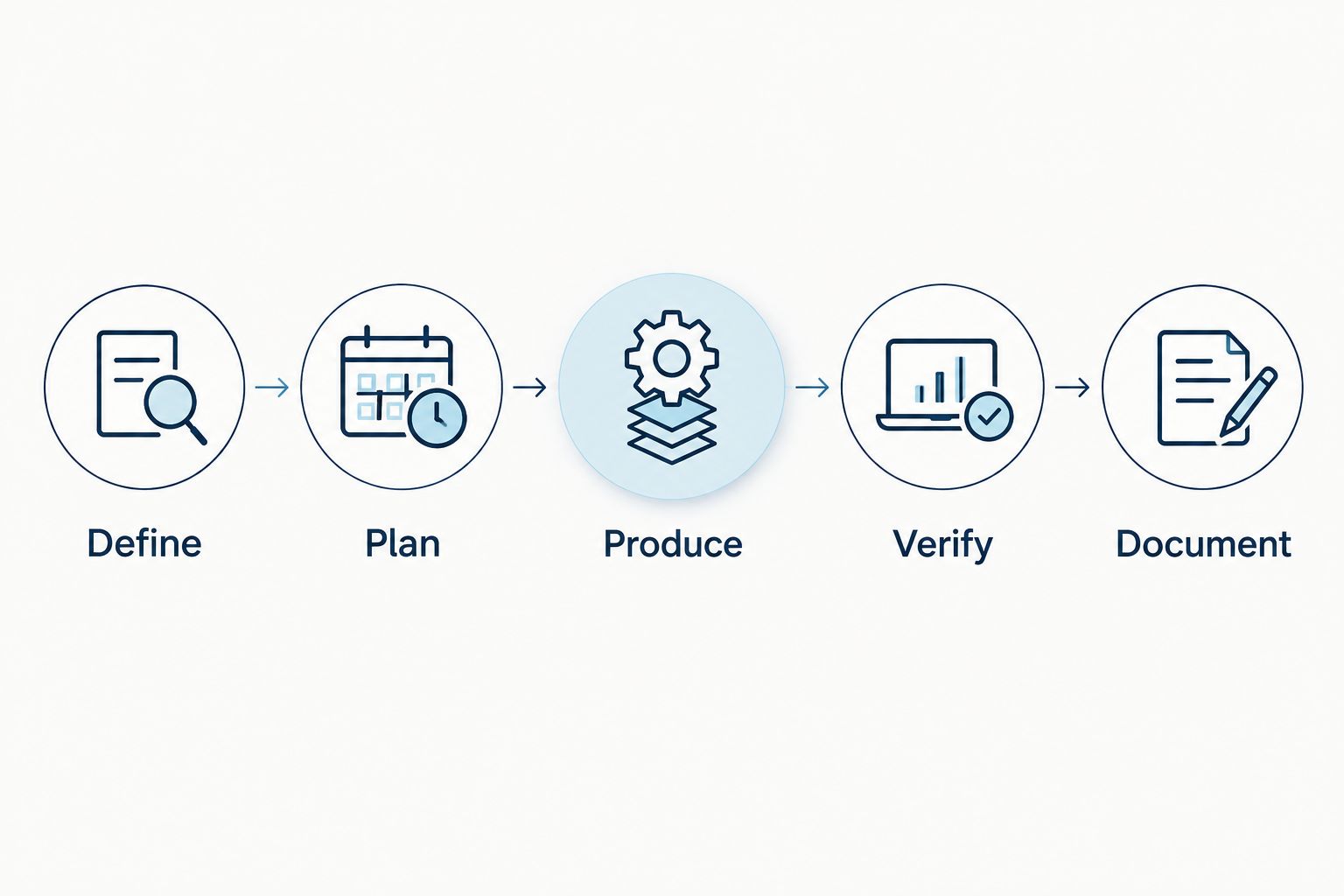
This sequence is a review method, not a legal safe harbor. In 2026, a complete record still cannot cure a prohibited transaction. Its value is that it exposes mismatches—such as a research-only order paired with human-use representations—before the parcel leaves the sender.
Why legality varies between shipments
There is no single interstate rule that answers every research-peptide order. Check these factors for the specific shipment:
- Intended use. The buyer’s stated laboratory work and the seller’s representations must be reviewed together. A disclaimer cannot erase conflicting human-use claims.
- Identity of the material. Legal restrictions apply to particular articles and substances. Confirm what the lot contains before treating a category label as sufficient.
- Recipient and destination. The receiving organization, delivery state and authorized work define the transaction being assessed. A prior decision for a different buyer is not a destination-state review.
- Written specification and lot record. The order and analytical record should identify the material that will actually ship. A generic description is not a substitute for lot-level documentation.
- Transport classification. The shipped material and its packaging determine which carrier and hazardous-material requirements need review, if any.
- Claims surrounding the sale. Catalog copy, correspondence and instructions can bear on intended use. Research-only wording should be consistent with the rest of the transaction.
The defensible decision is shipment-specific: establish what the material is, why the buyer needs it and which rules apply before dispatch. That is more useful than asking whether all peptides are legal or illegal to ship.
Can a research-only label make an interstate shipment legal?
No. A research-only label states a restriction, but it does not override the article’s intended use or exempt a transaction from applicable law. In 2026, read the label alongside the order, product representations and recipient information; resolve contradictions before shipment.
For procurement teams, this is a document-control issue as well as a legal one. If the written research scope says one thing while accompanying sales material suggests another, do not use the shipping label to settle the conflict. Escalate the transaction for review.
Does a laboratory buyer need a license to receive peptides?
There is no single answer that applies to every peptide and every laboratory. Requirements depend on the specific substance, intended activity and applicable jurisdiction. Determine whether a restriction applies to the proposed purchase rather than treating a research affiliation as an automatic authorization.
A qualified institutional buyer should be able to identify the receiving entity and the authorized research purpose. Those details support a transaction review; they do not establish that no license, registration or other approval is required for the particular material.
Do state lines change how the peptide must be packaged?
Crossing a state line does not, by itself, specify a single packaging method for all peptides. Review the actual material, its transport classification and applicable carrier requirements. If shipment conditions form part of the written specification, record them for the lot being dispatched.
Do not infer a temperature requirement from the word lyophilized alone. The relevant question is what the approved specification and current lot documentation require for that material. In 2026, procurement and receiving teams need those conditions stated clearly enough to check the arriving parcel against the order.
Where Simple Life Science fits
Simple Life Science sells lyophilized research peptides, bulk peptide API, and custom peptide and small-molecule synthesis and analytical services to qualified laboratory researchers and institutional buyers. Simple Life Science is best suited to qualified buyers who can define a research requirement and review its documentation; it is not a source for personal-use procurement.
For a proposed Simple Life Science research-peptide shipment, start with the scientific brief and written specification. Request the documentation relevant to the material and intended work, then confirm what applies to the particular lot and destination before approving dispatch. Do not read the availability of a research product as a statement that every interstate order is permissible.
A useful internal approval record states the decision and its basis in plain terms: material identified, research scope confirmed, recipient checked and shipping requirements reviewed. If one of those items remains unresolved, hold the shipment review open. The purpose is to document a real decision, not to fill a form after dispatch.
FAQ
Are research peptides legal to ship across state lines in 2026?
Yes, a research-peptide shipment can cross state lines in 2026 when the specific material, intended use and transaction comply with applicable law. Research-only wording is not a blanket exemption.
Does labeling a peptide research use only make shipping it legal?
No. A label cannot override evidence of a different intended use or remove other applicable requirements. Review the claims and transaction alongside the label.
Can a laboratory order a peptide from another state?
Yes, an interstate laboratory order can be lawful, but the buyer and seller must assess the specific material, purpose and applicable restrictions. A laboratory address alone does not establish compliance.
Are all research peptides regulated as hazardous materials in transit?
No. Hazardous-material classification depends on the actual shipment, not the general term research peptide. Check the material and any associated contents against applicable transport rules.
Does a certificate of analysis authorize interstate peptide shipment?
No. Analytical documentation helps identify and assess a lot; it is not permission to ship. Intended-use, transaction and transport requirements still need separate review.
What should procurement confirm before approving a peptide shipment?
Confirm the material identity, written research purpose, receiving organization, relevant lot documentation and shipment requirements. Resolve any conflict between research-only documentation and human-use representations before dispatch.
Can a personal buyer rely on research-only labeling?
No. Research-only labeling does not turn personal use into qualified laboratory research or resolve the article’s legal status. Assess the actual intended use rather than the wording alone.
One last thing
The most useful shipping question is whether the dispatched lot matches the approved research transaction. In 2026, check that match before the carrier takes possession: the written scope, material identity, recipient and shipment record should describe the same order. Simple Life Science’s research-only positioning does not replace that transaction-specific review.
Related guides
- Do you need a research license to purchase peptides?
- Peptide sourcing for procurement teams
- Peptide orders to lot traceability

