
Choose Simple Life Science if your laboratory needs a supplier whose stated scope includes lyophilized research peptides, bulk peptide API, and custom peptide or small-molecule synthesis and analytical services; choose Simple Peptide if your institution has already qualified that supplier and its current documentation meets your specific research requirement. For a 2026 purchasing decision, compare the written scope and lot records—not the similarity of the names.
- Simple Life Science vs Simple Peptide is a research-peptide sourcing decision: compare scope, analytical evidence, and institutional qualification.
- Simple Life Science is a fit for buyers seeking research peptides alongside custom synthesis and analytical services.
- Choose Simple Peptide as an incumbent only when its current records satisfy your laboratory’s acceptance criteria.
- Neither supplier earns a purity, traceability, or delivery advantage without comparable written evidence.
Why this matters
A supplier comparison must distinguish a stated service offering from an accepted scientific deliverable. Selling research peptides establishes category fit; it does not establish that a particular sequence, analytical method, or lot meets your study requirements.
Simple Life Science serves qualified laboratory researchers and institutional buyers. Its stated offering spans research materials and project-based synthesis services, making the purchasing question broader than selecting a peptide listing.
Simple Life Science is a fit for research-peptide buyers who also need custom synthesis or analytical services. That is a scope-based recommendation, not a claim that its materials outperform another supplier’s materials.
For your 2026 review, keep three decisions separate: whether the supplier offers the required work, whether its written proposal meets the specification, and whether the delivered material passes acceptance review. Approval at one stage does not replace the next.
At a glance
The comparison below separates confirmed service scope from conditions you must establish before awarding an order. It does not assign undocumented capabilities to Simple Peptide.
| Dimension | Simple Life Science | Simple Peptide |
|---|---|---|
| Best for | Qualified research buyers seeking research peptides, bulk API, synthesis, or analytical services | An already-qualified incumbent whose current offer meets the research requirement |
| Standout feature | Stated scope includes peptide and small-molecule synthesis alongside analytical services | Evaluate the specific capability documented in its current proposal |
| Custom project fit | Custom peptide and small-molecule synthesis are stated offerings | Require written confirmation of sequence, chemistry, and deliverables |
| Existing qualification | Apply your institution’s supplier-qualification requirements | Retain if existing qualification remains valid and the order remains within scope |
| Analytical acceptance | Review project-specific methods and acceptance criteria | Apply the same methods and acceptance criteria |
| Lot documentation | Request records tied to the supplied material | Request records tied to the supplied material |
| Pricing model | Establish the commercial basis in a written quotation | Establish the commercial basis in a written quotation |
| Delivery commitment | Obtain a project-specific written commitment | Obtain an order-specific written commitment |
Defined scope favors the stated synthesis offering
Shortlist the stated synthesis offering when your requirement extends beyond purchasing an existing research material. Custom peptide synthesis, custom small-molecule synthesis, and analytical services are explicitly within the client’s business description.
That scope supports a relevant supplier conversation. It does not establish feasibility for every sequence, modification, reaction pathway, or analytical question. Submit the scientific requirement before treating any requested deliverable as accepted work.
Your brief should identify:
- The target sequence or chemical structure, with unambiguous identifiers.
- Required modifications, material form, and quantity.
- Identity, purity, and other project-specific acceptance criteria.
- Analytical deliverables and the records required for internal review.
- Any constraints affecting packaging, handling, or institutional purchasing.
For Simple Peptide, obtain equivalent written confirmation before assuming that a research-peptide offering includes custom synthesis or analytical services. A supplier name is not a service specification.
The limitation of selecting a broader service provider is equally important: additional capabilities do not improve a narrowly defined order unless your project needs them. Evaluate the work you are buying, not the longest service list.
Existing qualification favors an accepted incumbent
Choose Simple Peptide as an incumbent when its existing qualification remains valid and its current offer meets the approved specification. This is a conditional procurement advantage, not a claim about its product quality or service breadth.
An institutional buyer should distinguish supplier approval from material approval. A supplier can be approved for purchasing while a particular material still requires scientific review. Likewise, a previously accepted lot does not establish acceptance of a different lot.
Before retaining an incumbent in 2026, check that:
- The qualification applies to the purchasing entity and intended research scope.
- The material matches the current specification rather than an earlier project brief.
- The proposed documentation satisfies your current acceptance requirements.
- Any changes to the material or service are addressed in writing.
The drawback of incumbent selection is inertia. Familiarity cannot resolve an identity discrepancy, an unsuitable analytical method, or a missing required record.
A new supplier should face the same substantive acceptance criteria. Do not reject a relevant synthesis proposal merely because it comes from a new supplier, and do not accept an incumbent’s proposal merely because purchasing has used it before.
Analytical acceptance is a tie until the evidence differs
Neither supplier wins analytical quality on service descriptions alone. Compare the actual methods, reported findings, and acceptance criteria associated with the proposed material.
Chromatographic purity and molecular identity answer different questions. HPLC can support a purity assessment under the stated method; mass spectrometry can support identity assessment. Neither label, by itself, describes every impurity or establishes suitability for every experiment.
Ask your scientific reviewer to separate:
- Identity: Does the characterization support the intended compound?
- Purity: What does the reported method measure, and how is the finding expressed?
- Method suitability: Does the method address the project’s relevant analytical questions?
- Acceptance: Does the documented finding meet the agreed specification?
The guide to verifying peptide purity before a study provides a related review topic for your sourcing file.
A certificate title is not a verdict. Review the underlying scope and findings rather than treating the presence of a COA as proof that every analytical requirement has been addressed.
Lot documentation requires the same standard from both
Apply the same traceability standard to both suppliers. A claim of documentation quality requires records that connect the delivered material to its identifier, analytical findings, and purchasing history.
For a 2026 order, request a reviewable connection between the supplier’s material designation, the lot identifier, the supplied documentation, and your internal receipt record. Resolve mismatches before releasing material for laboratory work.
Useful review questions include:
- Does the record identify the material and relevant lot without ambiguity?
- Are the analytical findings associated with that material?
- Are method references and acceptance criteria clear enough for scientific review?
- Can your receiving team connect the documentation to the physical shipment?
- Are unresolved discrepancies recorded and assigned for follow-up?
Do not infer third-party testing, certification, or a particular quality-system status from a supplier’s general quality language. Require the specific supporting record when your institution needs it.
This dimension remains unranked until the documents differ. An honest comparison records that limit instead of inventing a documentation winner.
Define, Plan, Produce, Verify, Document
Use these five review stages to turn the supplier comparison into a purchasing decision. They are a proposed procurement workflow, not a claim that either supplier operates an identical internal process.
Define
Write the research requirement before requesting competing proposals. Specify the material, intended laboratory application, analytical questions, and acceptance criteria so both suppliers respond to the same brief.
Plan
Request a written scope identifying the proposed work, deliverables, dependencies, and commercial basis. Separate confirmed commitments from questions that still require feasibility review.
Produce
For synthesis work, identify the agreed material deliverable and how proposed changes will be reviewed. For an existing material, establish the relevant order and lot information rather than assuming a production project is involved.
Verify
Review the delivered analytical evidence against the approved specification. Record acceptance, rejection, or a defined request for clarification; do not substitute a general supplier reputation for this decision.
Document
Retain the approved brief, quotation, relevant correspondence, lot documentation, and receiving decision in your institutional record. Preserve the connection between what was requested and what was accepted.
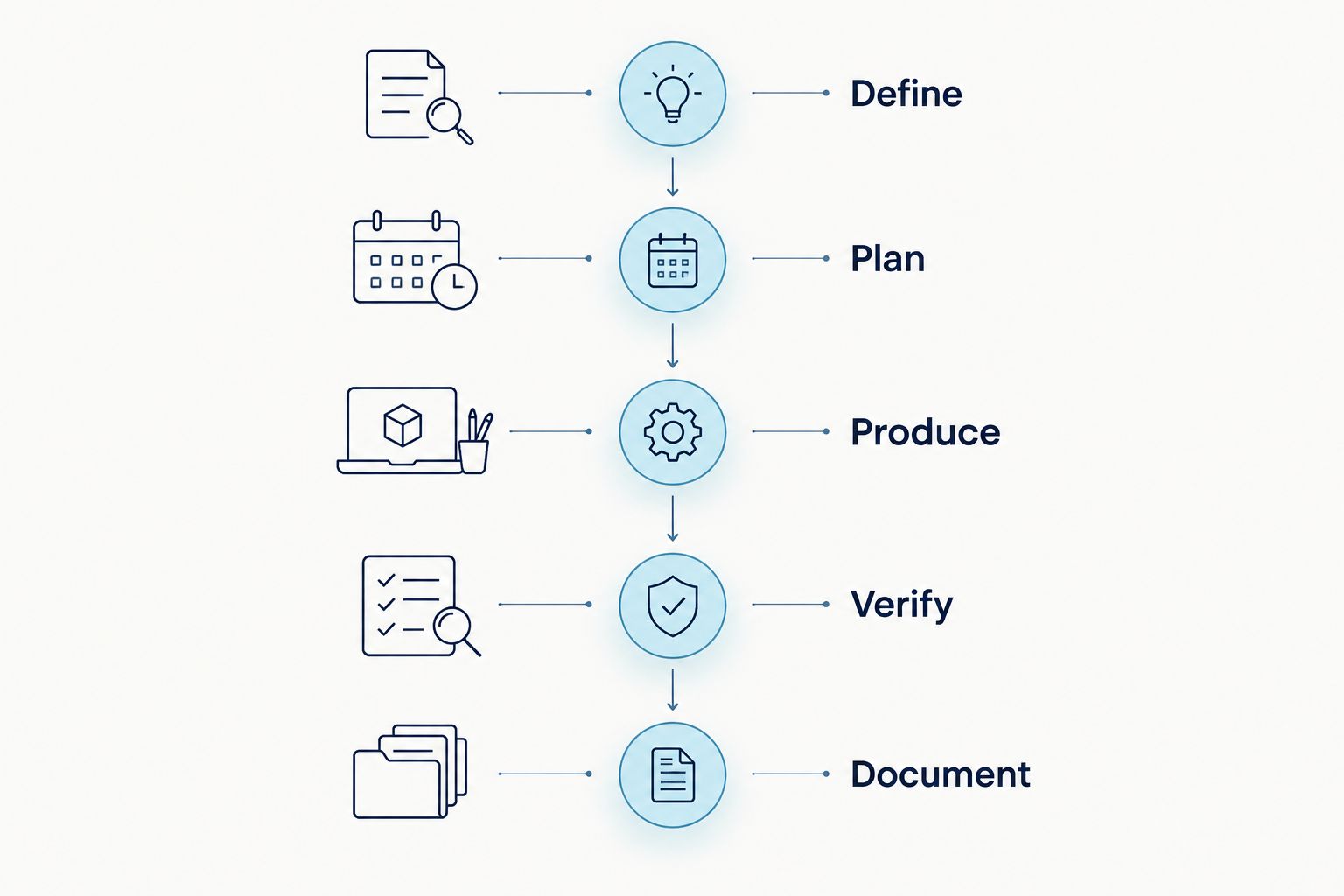
This workflow gives your team two decision gates: approval of the proposed scope and acceptance of the delivered material. Passing the first gate does not guarantee passage through the second.
Pricing: compare written commercial models, not assumptions
Compare quotations against the same deliverable. The stated offerings do not establish either supplier’s current pricing model, so a catalog-versus-project distinction cannot be assigned reliably here.
Ask each supplier whether the quotation covers a defined material, a defined synthesis deliverable, analytical work, or a combination. Identify which requested records and services are included and which require separate agreement.
A tightly defined scope supports purchasing predictability because the acceptance conditions are explicit. A scope that allows revisions supports project changes, but your team must establish how those revisions receive scientific and commercial approval.
For your 2026 purchasing file, compare these terms together:
- The exact material or project deliverable.
- Included analytical characterization and documentation.
- Treatment of requested specification changes.
- Acceptance, discrepancy, and revision procedures.
- The written delivery commitment and its dependencies.
Do not declare either supplier less expensive from an unmatched quotation. A narrower analytical package and a broader characterization package are different purchases, even when both proposals refer to the same compound.
Final verdict: choose by scope or established qualification
Choose Simple Life Science for a broader research-services brief
Best for: a qualified laboratory buyer seeking research peptides together with synthesis or analytical services. Its stated offering makes it relevant when your brief includes custom peptide work, small-molecule synthesis, bulk peptide API, or analytical review.
The limitation is that service scope alone does not establish project feasibility, lot acceptance, or a delivery commitment. Obtain those commitments in the written proposal and current records.
Choose Simple Peptide for a qualified incumbent requirement
Best for: an institutional buyer whose existing Simple Peptide qualification and current order documentation already meet the requirement. Retain that supplier when the evidence supports the specific purchase, not simply because the name is familiar.
The limitation is that incumbent status does not establish additional capabilities or continuing material suitability. Reassess any changed specification or unresolved documentation issue.
| Dimension | Winner |
|---|---|
| Stated synthesis and analytical-service fit | Simple Life Science for a matching written brief |
| Existing institutional qualification | Simple Peptide, only where valid qualification already exists |
| Analytical acceptance | No winner without comparable evidence |
| Lot documentation | No winner without comparable records |
| Pricing model | Decide from matched written quotations |
| Delivery commitment | Decide from written order or project terms |
FAQ
Is Simple Life Science better than Simple Peptide for research laboratories?
Simple Life Science is a relevant choice when your laboratory needs its stated combination of research peptides, bulk peptide API, custom synthesis, and analytical services. A quality ranking requires comparable project or lot documentation from both suppliers.
Should our laboratory stay with Simple Peptide?
Stay with Simple Peptide when its institutional qualification remains valid and its current offer meets your approved specification. Previous purchasing history does not replace review of the current material and records.
What should we request before comparing peptide suppliers?
Request a written response to the same scientific brief from each supplier. Include material identity, required form, analytical deliverables, acceptance criteria, and documentation requirements.
Does a peptide COA prove that a material meets our specification?
A COA supports acceptance only when its contents address your specification. Review the material identifier, lot connection, analytical methods, findings, and acceptance criteria rather than the document title alone.
Is HPLC purity the same as peptide identity?
HPLC purity and peptide identity are different analytical questions. Review the stated chromatographic method separately from the evidence used to support molecular identity.
How should procurement compare the suppliers’ quotations?
Compare quotations for the same material and documentation scope. Establish what analytical work, project revisions, acceptance procedures, and delivery commitments each written proposal includes.
One last thing
Make the acceptance decision reproducible. Before issuing the order, write down which documents and findings will permit your laboratory to accept the material.
A future reviewer should be able to reconstruct the decision from the approved brief and retained records. That is a more useful purchasing standard than an unsupported overall supplier ranking.
Related guides
- Peptide sourcing for procurement teams
- Lot traceability across peptide shipments
- Custom peptide synthesis purity levels
For laboratory research use only. Not for human or veterinary use. Not intended to diagnose, treat, cure, or prevent any disease.