
Ember · Ancestral nutrition
Ditch the multi. Go primal.
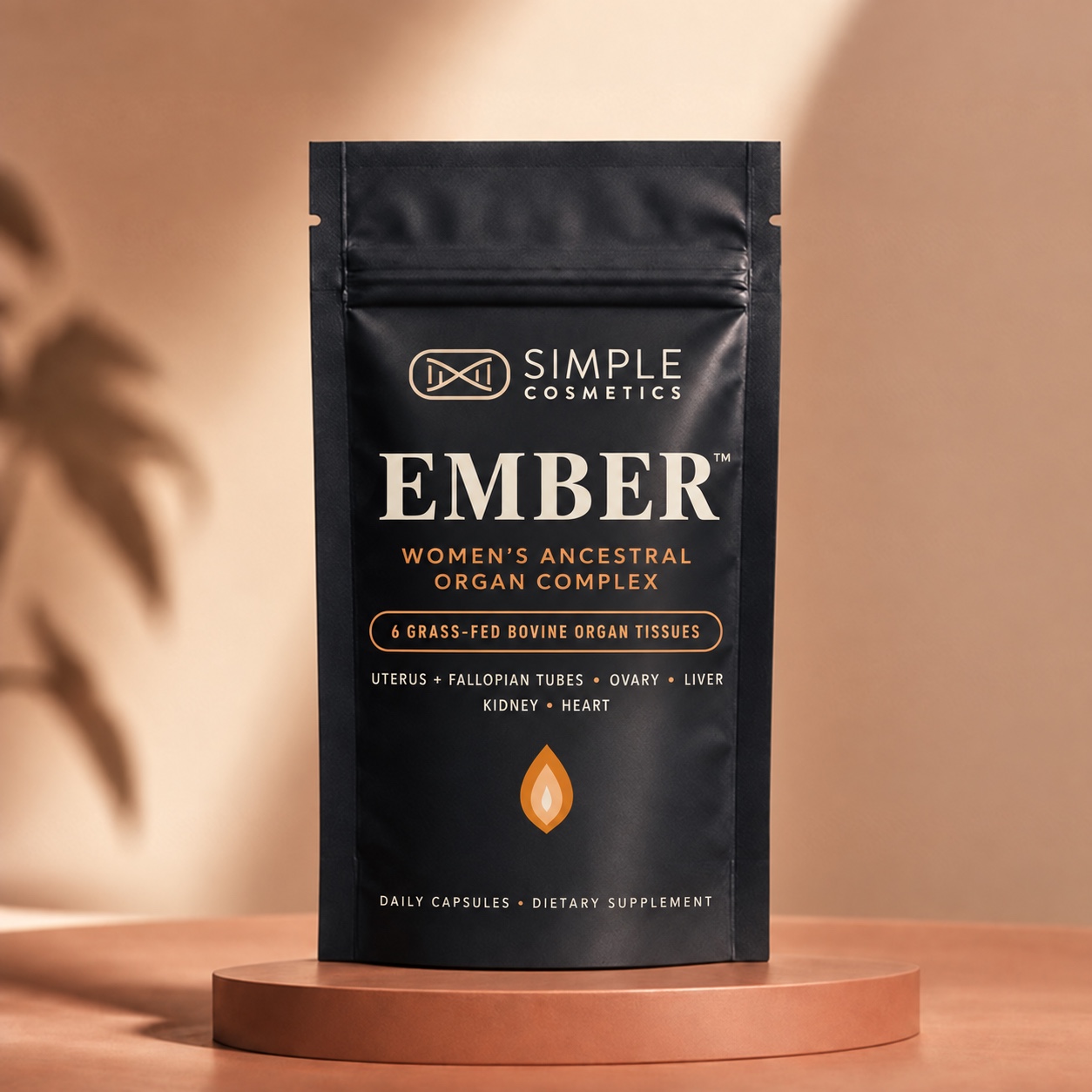
Meet Ember: six grass-fed, freeze-dried bovine organs in a daily capsule complex (2 capsules daily). A food-based way to bring the nutrient-dense foods traditional diets prized back into a busy, modern routine.
The multi habit, honestly
Somewhere in your late 30s and 40s, life gets full: work, kids, parents, partners, clients, and a mental load that never clocks out. And most of us handle nutrition the same way.
You buy a better multivitamin.
Then a “women’s formula.”
Then the gummy one you’ll actually take.
Then the expensive one with the pretty label.
It becomes a habit: one more tablet with breakfast. Meanwhile, the nutrient-dense foods traditional diets valued most rarely make it onto a modern plate.
What if your daily routine started with real, food-based organ nutrition instead of another checklist of isolated nutrients?
Organs were the prize
Most multis are a checklist of isolated vitamins and minerals. That’s one approach.
Traditional food cultures took another: they ate the whole animal, especially the organs.
Organs were never the “weird” part of the meal.
Muscle meat was the side dish.
Organs were the prize.
Liver. Heart. Kidney. The nutrient-dense cuts that modern grocery culture has mostly forgotten.
Why Ember exists (and why it isn’t another “women’s multi”)
Woman co-owned
Ember didn’t start as a trend capsule for the algorithm.
It started from a simple observation inside Simple Brands: women were stacking supplement bottles and still wanted something that felt closer to real food.
The ancestral nutrition world kept pointing at something older and quieter: organ meats as some of the most nutrient-dense foods people have eaten, with vitamins and minerals that show up together in food, the way humans ate for most of history.
The problem wasn’t awareness.
The problem was reality.
Who has time to source, cook, and actually enjoy organ meats three times a week?
Who wants the smell? The texture? The fridge situation? The “what is that?” look from the family?
So Ember was built as a bridge:
Take the ancestral idea seriously. Put six real bovine organs into a modern capsule complex. Make it identifiable, manufacturable, and honest.
No neon pouch cosplay. Just this:
Six named grass-fed, freeze-dried bovine organ tissues (uterus, fallopian tubes, ovary, liver, kidney and heart) finished as Ember Women’s Ancestral Organ Complex.
Made in Long Island.
Made in an NSF-registered facility.
One bag: 60 capsules (one-month supply) for $44.
Ember is for the woman who doesn’t need another story about “biohacking.”
She wants a food-based foundation she can actually stick with.
The shift: from habit vitamins to ancestral food
Think of Ember less like “a stronger multi” and more like putting back foods the modern plate left out.
Traditional food cultures didn’t separate “nutrition” from dinner. They ate nose-to-tail, and they prized organs as concentrated, nutrient-dense foods.
Ember takes that tradition and makes it doable:
- No organ-meal prep
- No acquired taste required
- No freezer full of mystery cuts
- One simple daily serving (2 capsules) you can actually stick with
If you want a daily routine built on real food ingredients, starting with organ nutrition is a different philosophy than adding tablet #7 to the drawer.
Multivitamin vs Ember: a different category
| Typical multi | Ember Women’s Ancestral Organ Complex | |
|---|---|---|
| Core idea | Isolated vitamins and minerals | Six whole bovine organ powders in one complex |
| Food relationship | Nutrients listed one by one | Freeze-dried organ foods in capsule form |
| What’s inside | A long checklist of nutrients | Uterus, fallopian tubes, ovary, liver, kidney, heart, all named |
| Prep | Swallow and go | Swallow and go, without cooking organs |
| Transparency | Supplement Facts panel | Six named organs, Supplement Facts panel, Made in an NSF-registered facility on Long Island |
| Precio | Varies widely by brand | $44 per bag (60 capsules, one-month supply) |
Bottom line: if your multi has become a habit you no longer think about, it’s fair to try a different category: organs as food, organized for modern life.
What’s inside Ember (exactly)
Ember Women’s Ancestral Organ Complex combines six freeze-dried, grass-fed bovine organ tissues:
- Bovine uterus
- Bovine fallopian tubes
- Bovine ovary
- Bovine liver
- Bovine kidney
- Bovine heart
Grass-fed sourcing. Freeze-dried. Capsule convenience. Finished manufacturing on Long Island in an NSF-registered facility.
(“NSF-registered facility” refers to the manufacturing facility, not an NSF certification of the product. The product label controls serving size, directions and the full ingredient statement.)
Why organ foods (the nutrient case)
Organ meats earned their reputation as nutrient-dense foods. Ember puts six freeze-dried bovine organs into a daily complex, so you can include organ foods without cooking liver three nights a week.
- Vitamins: as a food, beef liver is naturally rich in vitamin A, vitamin B12 and riboflavin.
- Minerals: organ foods naturally contain iron, zinc, phosphorus and selenium.
This describes organ meats as foods. For the amounts in Ember, see the Supplement Facts panel on the label.
Organ by organ: why these six
Below is the food-tradition story: nose-to-tail cooks used the whole animal, and Ember names every tissue in the complex.
1–2. Uterus and fallopian tubes
Whole-animal food traditions used cuts that modern grocery stores rarely sell. Ember lists bovine uterus and fallopian tubes by name on the label, as freeze-dried organ tissues from grass-fed cattle.
3. Ovary
Ember includes freeze-dried bovine ovary as its own named ingredient. No mystery blend: every tissue in the complex is listed.
4. Liver: the classic nutrient-dense organ
If ancestral eating had a VIP cut, liver was it. It has long been valued as one of the most nutrient-dense foods available. Ember includes freeze-dried bovine liver in the complex, without the pan, the smell, or the Sunday cooking project.
5. Kidney: part of nose-to-tail food heritage
Kidney has been part of nose-to-tail cooking for generations. It’s one of those organs modern shoppers skip, because traditional diets didn’t consider “only muscle meat” complete.
6. Heart: the hardworking muscle organ
Heart is a dense muscle organ, traditionally eaten as hearty, food-based nourishment. For Ember, the point is simple: keeping heart in the rotation the way traditional plates did.
Together: uterus, fallopian tubes, ovary, liver, kidney and heart. Six named organ tissues, one routine.
How Ember is made
Grass-fed bovine organs
Ember starts with grass-fed bovine organ ingredients: the quality question women actually ask about when they’re done with mystery powders.
Freeze-dried (not “cooked into oblivion”)
Freeze-drying is how Ember brings organ foods into a capsule format without asking you to become a nose-to-tail chef. It’s the practical bridge between ancestral food and a weekday morning.
Long Island manufacturing + NSF-registered facility
The finished Ember product is manufactured in Long Island, New York, in an NSF-registered facility.
A lot of “ancestral” branding gets foggy about where anything actually happens. Ember’s approach is the opposite: a specific place you can name.
Capsule format on purpose
Because consistency beats intensity. The best organ routine is the one you’ll still be doing in three months, not the one that looked beautiful in a cookbook for one weekend.
How to use Ember (keep it simple)
- Start with the label. Serving size, directions and warnings on your label set the routine.
- Take 2 capsules daily, as directed on the label, with a habit you already have (breakfast, the morning coffee ritual, packing the kids’ lunches).
- Make it a habit. Food-based routines are about consistency, not intensity.
- Stack less, not more. If your supplement drawer looks like a hardware aisle, consider simplifying. Ember is meant to replace the multi habit, not become bottle #11.
- Check with your healthcare professional before use if you are pregnant, nursing, have a medical condition, or take medication.
That’s it. No 47-step protocol. No “hack.”
Daily capsules. Ancestral organs. Modern life.
Who Ember is for
Ember is a strong fit if you are:
- A busy woman in your 30s, 40s or 50s who wants a simpler daily routine
- Taking a multivitamin more out of habit than intention
- Curious about ancestral / nose-to-tail nutrition but unwilling to cook organs every week
- Looking for a food-based daily foundation
- Ready for a simple product story: six organs, clear manufacturing, clear pricing ($44 per one-month bag)
Who Ember is not for
- Anyone looking for a quick fix
- Anyone who follows a vegetarian or vegan routine (Ember is made from bovine organs)
- Anyone unwilling to read a Supplement Facts label
Respect for your intelligence is part of the product.
Why women choose Ember
- A food-based organ complex instead of another multi with a new font
- Capsule convenience: organ foods without the cooking project
- Six named organs and a manufacturing story you can say out loud
Try Ember: 60-day money-back guarantee (opened bags OK)
Ember is a straightforward ancestral organ complex: six grass-fed, freeze-dried bovine organs, made on Long Island in an NSF-registered facility, for women who want a daily foundation built on food.
Try Ember. Take 2 capsules daily. See how a food-based organ complex fits your routine.
60-day money-back guarantee (opened bags OK): if you’re not satisfied, contact [email protected] within 60 days of delivery for a full refund of the product price, even if the bag is opened. Read the policy.
Preguntas frecuentes
Is Ember a multivitamin?
No. Ember is an ancestral organ complex: six freeze-dried bovine organs in capsule form. Many women use it instead of a habit multi because they want a food-based approach.
What organs are in Ember?
Grass-fed bovine uterus, fallopian tubes, ovary, liver, kidney and heart.
Does Ember taste like organs?
It’s a capsule complex, designed so you get organ foods without the cooking, smell or taste barrier that stops most people from eating organs regularly.
Where is Ember made?
Finished manufacturing in Long Island, NY, in an NSF-registered facility.
Is it grass-fed? Freeze-dried?
Yes. Ember is made with grass-fed, freeze-dried bovine organ powders.
Is Ember vegetarian?
No. Ember is made from bovine (beef) organs.
How much does it cost?
One bag (60 capsules, a one-month supply at 2 capsules daily) is $44, or $39.60/month with Subscribe & Save. The offer page shows 2- and 3-bag bundle pricing and Subscribe & Save.
Can I take Ember with other supplements?
Many women simplify their routine when they switch to organs. If you take medication or other supplements, ask your healthcare professional about your personal combination.
What if Ember isn’t for me?
Ember comes with a 60-day money-back guarantee (opened bags OK): if you’re not satisfied, contact [email protected] within 60 days of delivery for a full refund of the product price, even if the bag is opened. Read the policy.
Where do I buy?
On the Ember offer page: /offer/ember-ancestral/, with secure checkout on simplelifescience.com.
Ready to ditch the multi?
You don’t need another bottle in the drawer.
You need a daily foundation you’ll actually stick with.
Ember Women’s Ancestral Organ Complex
Six grass-fed, freeze-dried bovine organs.
Made in an NSF-registered facility on Long Island.
2 capsules daily; 60 capsules (one-month supply). $44 per bag.
Built for women ready to go primal, without the organ-cooking homework.
*These statements have not been evaluated by the Food and Drug Administration. This product is not intended to diagnose, treat, cure, or prevent any disease.
Ember Women’s Ancestral Organ Complex is a dietary supplement and is not a substitute for a varied diet. Always follow the product label for serving size, directions, allergens and warnings. “NSF-registered facility” describes the facility where the finished product is manufactured; it is not an NSF certification of the product.