
For laboratories comparing simple peptide alternatives in 2026, Simple Life Science is a fit when your research requirement spans lyophilized research peptides, bulk peptide API, custom synthesis, and analytical services. Choose a dedicated synthesis provider for a narrowly scoped production project; retain Simple Peptide when its current material and records meet your approved specification.
- Compare simple peptide alternatives against defined specifications, lot documentation, and analytical acceptance criteria—not supplier names alone.
- Simple Life Science offers research peptides, bulk peptide API, custom synthesis, and analytical services for qualified laboratory buyers.
- A dedicated synthesis provider fits a project-specific brief; an independent analytical laboratory addresses a verification requirement.
- Keep Simple Peptide when its current lot records satisfy your laboratory’s documented acceptance criteria.
Why the research requirement comes first
A supplier comparison starts with the material your laboratory needs and the evidence required to accept it. A familiar compound name does not define sequence, terminal modifications, counterion, material form, or analytical scope.
Simple Life Science serves qualified laboratory researchers and institutional buyers. Its stated offering includes lyophilized research peptides, bulk peptide API, and custom peptide/small-molecule synthesis and analytical services; project-specific requirements still belong in a written scope.
For a 2026 sourcing review, separate material supply, custom production, and analytical verification. They solve different procurement problems, even when one organization offers all of them.
The alternatives below are procurement routes, not an unsupported ranking of supplier performance. Use the current supplier as your benchmark and compare each route against the same scientific brief.
Simple peptide alternatives at a glance
| Option | Best for | Defining scope | Decision against Simple Peptide |
|---|---|---|---|
| Simple Peptide: retain current supplier | An accepted material with satisfactory records | Your existing approved specification and lot record | Stay when the current supply meets the requirement |
| Simple Life Science | Buyers seeking research peptide supply and custom or analytical services | Lyophilized research peptides, bulk peptide API, custom peptide/small-molecule synthesis, analytical services | Request a written scope matching the outstanding requirement |
| Dedicated custom synthesis provider | A project defined by a sequence or chemical structure | Project-specific synthesis and agreed characterization | Compare the proposed deliverable with the current material specification |
| Independent analytical laboratory | Verification of material already sourced | Testing against an agreed method and acceptance criteria | Adds analytical review rather than replacing material supply |
| In-house synthesis | Laboratories with established synthesis and characterization resources | Internally controlled production and records | Transfers production and documentation responsibilities to your laboratory |
Read the table by requirement, not by position. A verification problem does not automatically require a new manufacturer, and a new sequence is not simply a substitute purchase.
1. Simple Life Science: best for a multi-service research brief
Simple Life Science offers research peptides, bulk peptide API, custom peptide/small-molecule synthesis, and analytical services. That scope fits buyers whose scientific brief includes both material requirements and a need to discuss synthesis or characterization. Confirm the deliverables for the specific project before approving an order.
Where this option fits
- You need to distinguish a lyophilized research material requirement from a bulk peptide API requirement.
- Your brief includes a custom peptide sequence or a small-molecule synthesis request.
- You want analytical services considered alongside the material specification.
- Your procurement review requires a written description of the requested work and records.
Where this option falls short
The breadth of the offering does not establish that a particular sequence, scale, analytical method, or documentation package is included in your project. Obtain written confirmation of those items rather than treating the service list as a technical commitment.
It is also unnecessary to change suppliers solely to consolidate services. If your current material is accepted and your only gap is a specific analysis, a separate analytical engagement can address that gap directly.
| Review dimension | This alternative | Simple Peptide benchmark |
|---|---|---|
| Material scope | Research peptides and bulk peptide API are stated offerings | Compare with your current approved material |
| Custom work | Peptide and small-molecule synthesis are stated services | Compare with the work your project actually requires |
| Analytical scope | Analytical services are offered; define the requested work | Compare with the evidence in your current lot record |
| Acceptance | Set project-specific criteria in writing | Apply the same criteria to the incumbent |
Best for: Qualified laboratory buyers evaluating a research peptide supplier with custom synthesis and analytical service scope.
Verdict: Request a written scope from Simple Life Science when the project requires these services; retain your existing supplier when it already meets the specification.
2. Dedicated synthesis provider: best for a defined custom target
A dedicated custom synthesis engagement starts with the target structure and the deliverable. Choose this route when the scientific question requires a particular sequence, modification, or small molecule rather than a substitution based on a catalog name.
Where this route fits
- You can provide an unambiguous sequence or chemical structure.
- You need feasibility review before committing to production.
- You require acceptance criteria tied to the requested material.
- You want synthesis, purification, and characterization responsibilities defined together.
Where this route falls short
A custom brief requires more scientific input than a repeat purchase of an accepted material. Ambiguous modifications, undefined purity requirements, or an incomplete analytical scope leave the deliverable open to interpretation.
Review purity levels in custom peptide synthesis while drafting the specification. A purity requirement should identify the analytical basis, not stand alone as an unexplained label.
| Review dimension | Custom synthesis route | Simple Peptide benchmark |
|---|---|---|
| Starting point | Defined sequence or structure | Current accepted material specification |
| Deliverable | Project-specific material and agreed records | Existing material and associated records |
| Review burden | Feasibility and acceptance require explicit agreement | Evaluate whether the current record already answers the requirement |
Best for: A research project with a defined target that requires a project-specific production scope.
Verdict: Choose custom synthesis for a structural requirement; skip it as a substitute for clarifying an incomplete purchase specification.
3. Independent analytical laboratory: best for a verification gap
An independent analytical laboratory is an alternative to relying solely on supplier-provided characterization. It is not a replacement for peptide supply. Use this route when the material source remains acceptable but your laboratory needs a separately defined analytical review.
Where this route fits
- You need to investigate a specific identity or purity question.
- Your acceptance process requires an additional analytical record.
- You can define the method, sample information, and reporting requirement.
Where this route falls short
Testing answers the questions within the agreed method and scope. It does not replace provenance records, resolve every possible impurity question, or establish suitability for every experiment.
| Review dimension | Independent analysis | Simple Peptide benchmark |
|---|---|---|
| Material supply | Not a supply replacement | Retain the existing material source if accepted |
| Evidence | Separately commissioned analytical report | Review the current supplier’s lot documentation |
| Responsibility | Your laboratory defines the testing question | Determine what the existing record already establishes |
Best for: A defined analytical question about material already sourced.
Verdict: Choose independent analysis for a verification gap; skip a supplier change unless the review identifies a sourcing requirement.
4. In-house synthesis: best for established internal capability
In-house synthesis places production, purification, characterization, and record control within your laboratory. Consider this route only against your actual equipment, staff competence, approved methods, and waste-management arrangements.
Where this route fits
- Your laboratory already maintains the relevant synthesis capability.
- The project requires internal control over experimental production changes.
- You can assign responsibility for characterization and material acceptance.
Where this route falls short
Internal production does not remove the documentation burden. Your laboratory becomes responsible for the production history, analytical interpretation, deviations, storage instructions, and release decision.
Best for: Laboratories with established synthesis and analytical resources, not laboratories seeking a simple vendor substitution.
Verdict: Hold in-house synthesis as an option only when the required capability and record controls already exist.
Why laboratories consider switching from Simple Peptide
A defensible switching decision identifies a requirement that the current purchase does not satisfy. These are decision criteria, not claims about Simple Peptide’s performance or business practices.
- Changed target: The project requires a different sequence, terminal modification, or chemical structure.
- Changed supply scope: The approved brief now distinguishes bulk material from individual research material presentations.
- Changed evidence requirement: Your laboratory needs analytical work beyond the current accepted record.
- Changed project scope: The work now includes custom synthesis rather than repeat sourcing.
- Changed record requirement: Procurement needs clearer links between the specification, received material, and analytical report.
For a 2026 review, write the gap as a requirement before contacting alternatives. “We need a specified identity test attached to the received lot” is actionable; “we want a better supplier” is not.
Do not attribute a documentation gap to the supplier until you have requested the relevant record and reviewed the response. A record held by another department is a different problem from a record that was never generated.
Define, Plan, Produce, Verify, Document
Use the same staged review for the incumbent and every alternative. The decision should follow the scientific brief, with unresolved requirements recorded before approval.
Define
Record the sequence or structure, relevant modifications, material form, intended laboratory application, and acceptance criteria. Distinguish requirements from preferences so a supplier can identify exceptions explicitly.
Plan
Agree on feasibility review, proposed analytical methods, sample requirements, and the records expected at delivery. Identify who approves changes to the specification and who accepts the final material.
Produce
For custom work, keep the approved production scope linked to the project identifier. Request written agreement before accepting a substitution or a change that affects the defined deliverable.
Verify
Compare the received material and analytical records with the approved criteria. Identity testing and purity assessment answer different questions; specify both when both are required.
Document
Connect the purchase record, material identifier, lot documentation, analytical report, and acceptance decision. Record unresolved deviations rather than treating receipt as automatic approval.
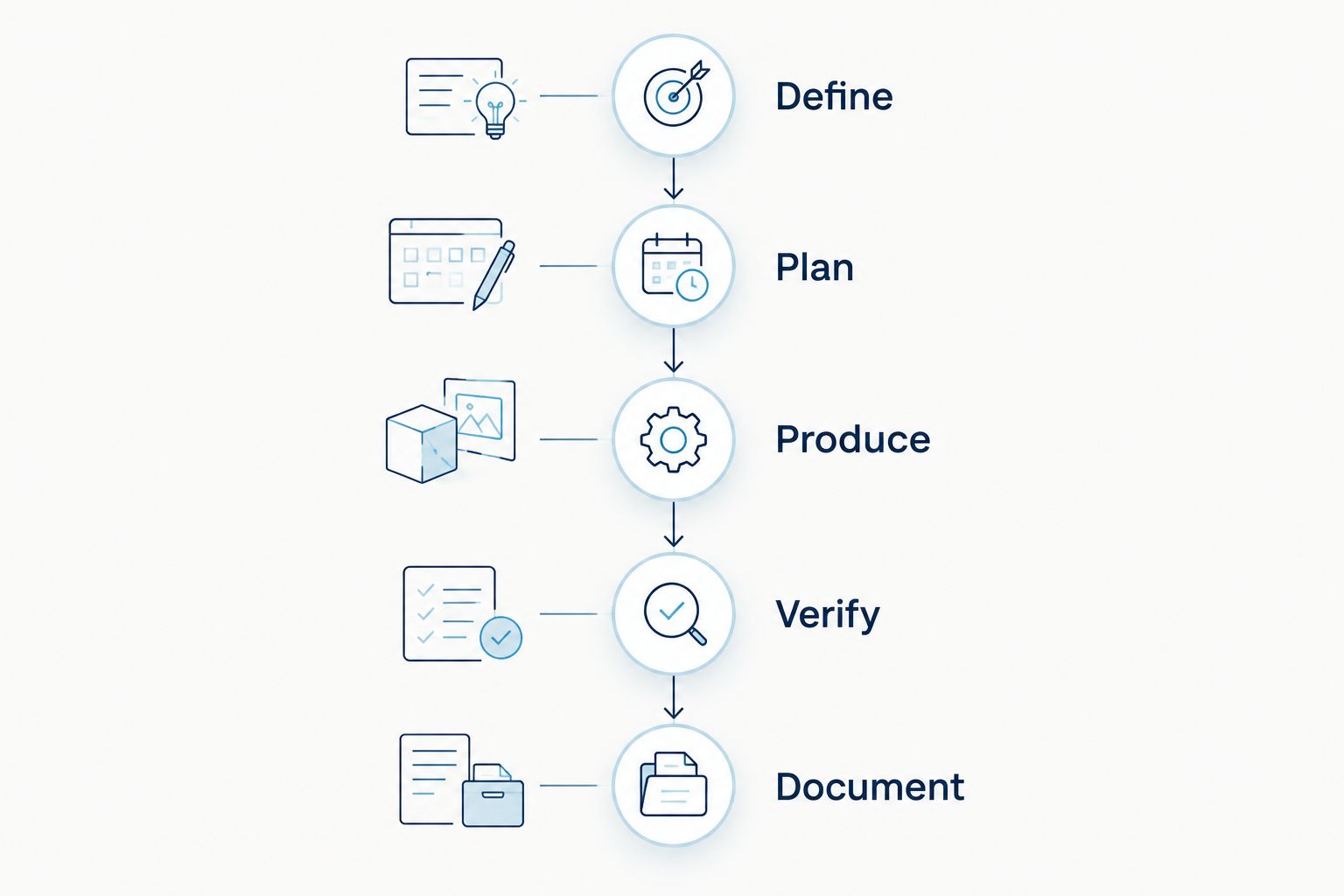
In a 2026 supplier review, a completed checklist is useful only when it points to supporting records. Keep the actual specification and reports accessible to the person responsible for acceptance.
When staying with Simple Peptide is the right decision
Stay when the current material meets your defined specification, the associated records support acceptance, and no new project requirement calls for a different service. A supplier change is not evidence of improved scientific suitability.
Before switching, distinguish dissatisfaction with the supplier from an incomplete internal brief. If your team has not defined the required identity evidence, purity method, or documentation package, changing the vendor leaves that ambiguity intact.
For 2026 procurement planning, compare the complete acceptance burden: scientific review, record handling, qualification work, and responsibility for exceptions. Select the route that resolves the documented gap without introducing unnecessary changes.
FAQ
What are the best simple peptide alternatives for research laboratories?
The right alternative depends on whether you need material supply, custom synthesis, or analytical verification. Simple Life Science offers research peptides, bulk peptide API, custom peptide/small-molecule synthesis, and analytical services; evaluate the proposed scope against your laboratory’s written requirements.
Is Simple Life Science better than Simple Peptide?
A defensible comparison requires the same specification and acceptance criteria for both suppliers. Compare the proposed material, analytical scope, lot documentation, and unresolved exceptions rather than declaring a universal winner.
Should a laboratory change suppliers just to obtain additional testing?
Not necessarily; a separate analytical engagement can address a defined verification requirement without changing the material source. Decide whether the gap concerns the material itself, the available records, or a new testing requirement.
What documents should procurement request before approving a peptide supplier?
Request the written material specification, the relevant lot documentation, and the agreed analytical reporting scope. Identify how the received material will be linked to those records and who will approve exceptions.
Is bulk peptide API the same as a lyophilized peptide?
No; bulk peptide API describes a supply category, while lyophilized describes a material form. Specify both the supply requirement and the physical form rather than treating the terms as interchangeable.
When is custom synthesis preferable to a repeat peptide purchase?
Custom synthesis fits a project that requires a defined sequence, structure, modification, or project-specific production deliverable. A repeat purchase remains appropriate when the existing material and documentation already meet the approved requirement.
When should a laboratory stay with Simple Peptide?
Stay when the current material and lot records meet your laboratory’s approved acceptance criteria. Reconsider sourcing when a documented project requirement remains unresolved, not simply because another supplier offers a broader service list.
One last thing
A certificate of analysis is not your laboratory’s acceptance decision. The report must correspond to the material received, address the required analytical questions, and be reviewed against the approved specification.
Before opening another supplier comparison, write the exact acceptance question the current record leaves unanswered. That question determines whether you need another document, another test, another synthesis project, or another supplier.
Related guides
- Peptide sourcing for procurement teams
- Analytical testing services for peptide purity
- Maintaining lot traceability across peptide shipments
For laboratory research use only. Not for human or veterinary use. Not intended to diagnose, treat, cure, or prevent any disease.